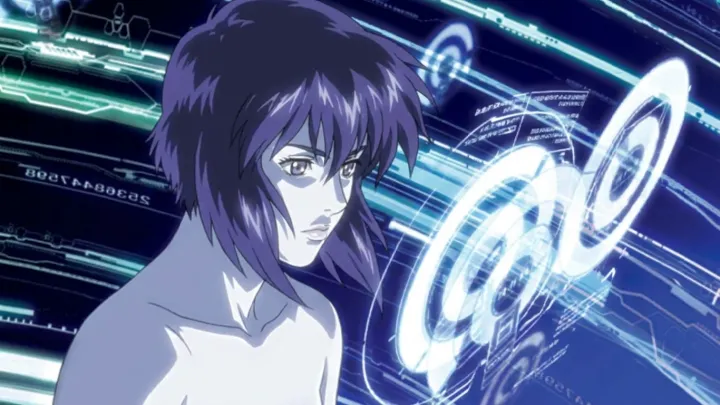
Lonely space hardware might be the real star of Pragmata, not its characters. Its hollow stations, glitching holograms and weightless debris point straight toward a specific strain of sci-fi anime that treats technology as ghost story, not gadget catalogue.
Most players underestimate how close Pragmata already feels to Serial Experiments Lain. Identity splinters across networks, subjective reality buckles under information overload, and the screen itself starts to look like unreliable firmware. That same hallucinatory chill runs through Texhnolyze, where amputated bodies and networked cities turn cybernetics into a slow, industrial nightmare instead of a power fantasy.
Even quieter shows carry the same charge. Planetarian shrinks the apocalypse down to one broken projector and a single robot, treating orbital junk and ballistic trajectories as background noise to a small, aching story. Blame! pushes in the opposite direction, an almost wordless tour through impossible megastructures that echo Pragmata’s airless corridors. For something more operatic, Knights of Sidonia layers mecha tactics, genetic engineering and relativistic travel over the same core image Pragmata keeps returning to: a fragile body, alone against the vacuum, framed by screens that may or may not be telling the truth.