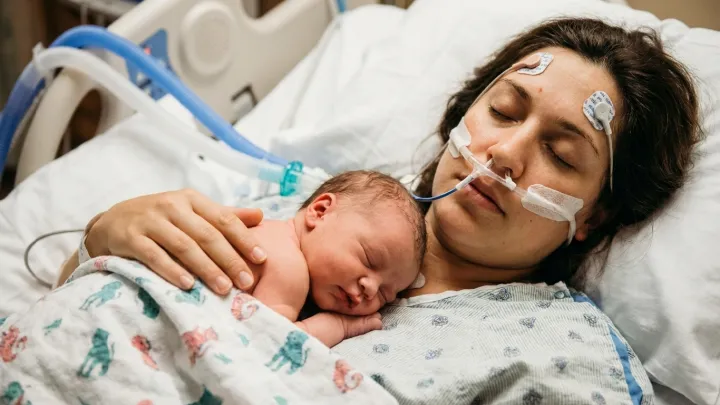
A single sentence, spoken between contractions, can redraw the entire map of childbirth. In the quiet of the delivery room, monitors hummed and the fetal heart tracing held steady, yet one detail broke the illusion of routine: the toilet water beneath Casey Gould ran suddenly, unmistakably red.
This was not just a bad feeling; such dread often tracks with real pathophysiology when blood volume, blood pressure, and oxygen delivery begin to slip out of balance. Gould’s pregnancy had followed the textbook, but a spike in blood pressure, a pounding headache, and that rush of bright blood signaled a possible hypertensive disorder with impending postpartum hemorrhage, a combination that can trigger disseminated intravascular coagulation and rapid organ injury.
Her words, “I think I’m about to die,” functioned less as drama than as a clinical alarm, forcing staff to escalate quickly from routine support to aggressive resuscitation: wide-bore IV lines, uterotonic drugs to clamp down the uterus, strict monitoring of hematocrit and coagulation, anesthesia on standby. Maternal mortality in high-income settings remains rare, yet near-miss events like Gould’s reveal how survival often hinges on two fragile elements, timely recognition and a woman insisting that her fear is evidence, not inconvenience.