
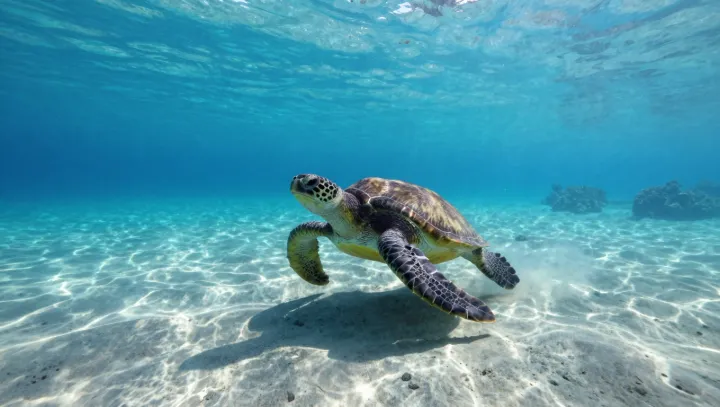
Stillness on the seafloor is not laziness; it is engineering. A resting sea turtle turns its body into a slow-burn life support capsule, cutting metabolic rate so sharply that every molecule of oxygen matters. Heartbeat drops to only a few strokes within long spans, and peripheral vasoconstriction shunts blood away from flippers toward brain and heart, stretching limited reserves.
The secret is that the clock is not in the lungs but in the chemistry of the blood. Hemoglobin and especially myoglobin in muscle act as compact oxygen banks, while rising partial pressure of carbon dioxide and falling blood pH are tracked relentlessly by chemoreceptors wired into the brainstem. Those sensors feed the same autonomic circuitry that, in humans, triggers the urge to breathe, but in turtles the threshold is tuned to tolerate profound hypoxia without neural damage.
So the turtle does not count minutes. It reads signals. As dissolved oxygen in blood and tissues approaches the safety margin set by its diving physiology, brainstem control centers ramp up drive to surface, even from deep rest. On the sand, the reptile looks inert. Inside, cardiovascular regulation, gas diffusion, and anaerobic metabolism run a tight, silent schedule that ends exactly at the waterline.