
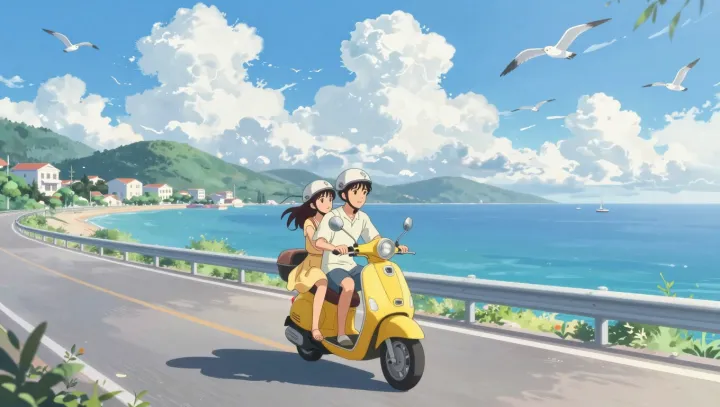
Sunlit scooter footage is lying. It looks like romance; it is mostly cinematography and limbic bait. Wide shots, flares on chrome, a city rushing past at just the right blur, all hijack visual reward circuits that media psychologists say are tuned to motion, symmetry and warm light more than to the messy reality of commitment.
Stranger still is that biology quietly sides with that scooter, not the candlelit table. Functional MRI and hormone assays show that shared novelty on even a low-speed ride can raise dopamine in the mesolimbic pathway and boost oxytocin release, a pairing linked to attachment, more reliably than scripted rituals that couples perform while barely speaking over a fixed menu.
Romance, then, is misbranded. What feels moving on screen is often passive spectatorship, while what actually deepens a bond is mild arousal plus joint problem solving: balancing together, reading traffic, tiny risks negotiated in sync, all feeding the brain systems for prediction error and social learning that a static dinner can leave unstimulated.
The awkward truth is that a cheap helmet, shared GPS confusion and a wrong turn can create more durable memory traces and interpersonal salience than expensive flowers, because the hippocampus tags those surprising motor moments as worth storing, and the person beside you as part of that stored pattern.