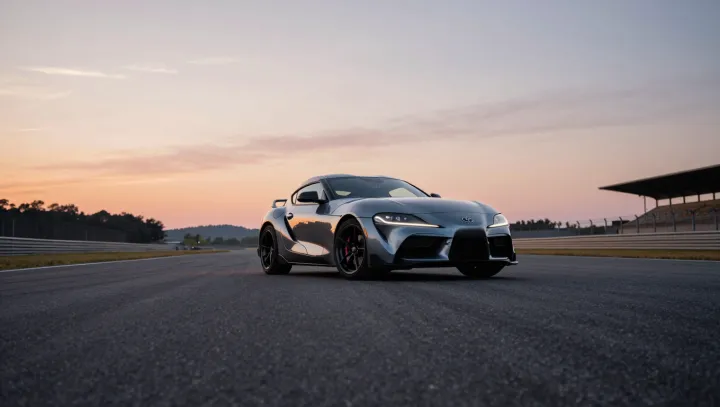
Cool air, not driver bravado, usually decides the stopwatch. At dusk the circuit quietly tilts the odds toward high-performance coupes, even when the car and driver look identical to their midday selves.
Denser air is the first conspirator. As ambient temperature drops, air density rises, feeding more oxygen into the intake charge and letting the engine management system enrich fueling without detonation, which lifts power. The same extra molecules push harder on wings and splitters, increasing aerodynamic downforce, so the chassis can sustain higher lateral acceleration through fast corners without any hardware change at all.
Tires then turn that invisible gain into lap time. Midday heat can overcook the rubber, pushing it past its optimal operating window and into greasy understeer or unpredictable oversteer. With a cooler track surface, the tread reaches its target hysteresis and maintains a more stable coefficient of friction, giving the driver confidence to brake later and lean longer on mechanical grip instead of fighting thermal fade.
Heat still matters, but not where spectators expect. The engine’s cooling system often works more efficiently in the chill, reducing the risk of power-sapping knock control, while brake systems shed energy without flirting with fluid boil. So the same coupe, the same pilot, the same layout, becomes a subtly different machine once the sun softens and physics, no longer hostile, starts to cooperate.