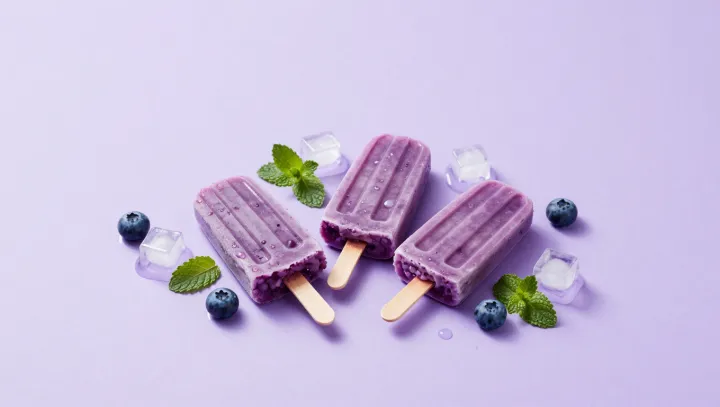
Blueberry–mint on a stick does more than quench thirst; it quietly edits your sensory reality. The frozen mix slams into thermoreceptors in the tongue and palate, receptors built from ion channels like TRPM8 that open when temperatures drop. Icy water, plus menthol from mint, drives those channels harder, sending a surge of “cold” signals through the trigeminal nerve toward the brainstem and somatosensory cortex. Heat outside does not change, yet cortical maps of the mouth report winter, not summer, so the body eases its alarmed response to environmental warmth.
The real trick, though, is that this fake winter is sugar glazed. Natural sugars in blueberries, and any added sweetener in the popsicle base, recruit taste receptor cells that talk directly to mesolimbic reward pathways, including the nucleus accumbens. Dopamine release there is not polite; it is fast, habit forming, and tightly linked to learned comfort. At the same time, blueberry pigments rich in anthocyanins modulate oxidative stress and may nudge vascular tone, supporting subtle shifts in cerebral blood flow that further reinforce a sense of relief rather than strain.
So a cheap frozen snack stages a coordinated neural event. Cooling input calms hypothalamic thermoregulatory networks, while sweet taste and familiar flavor patterns stamp the moment as a reward worth repeating. The body is still hot. Yet the brain, flooded with signals of cold and pleasure, briefly treats the heat as background noise rather than a threat.