
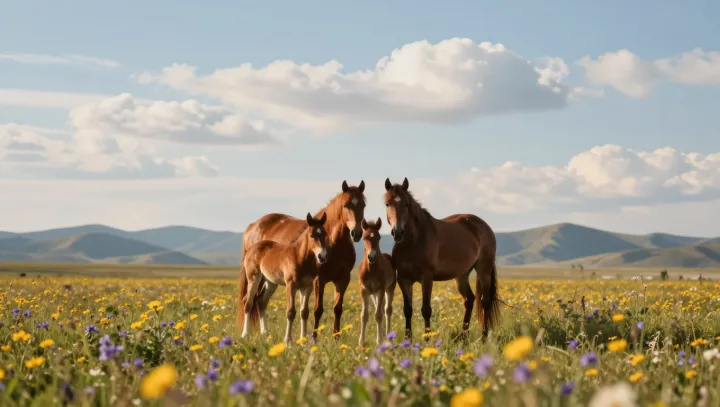
Calm grazing is not calm at all. Hidden in that slow head‑down rhythm is a full behavioral script that foals start copying before they can fully process risk. Ethologists argue this is herd training by proxy, with the mare’s body broadcasting safety cues that stand in for direct instruction, long before the foal’s prefrontal cortex can evaluate danger.
The key signal is not grass. It is physiology. When a mare lowers her head, chews steadily and keeps her ears loose, her heart rate drops and glucocorticoid levels stay low, creating a predictable pattern of autonomic nervous system activity that foals track like a live dashboard. Short glances, tiny adjustments in stance, a matching of breathing rate; these are early forms of social entrainment that anchor group vigilance while each individual brain is still under construction.
Herd safety, then, is outsourced first to bodies, only later to thought. Through observational learning and what neuroscientists describe as sensorimotor coupling, immature neural circuits in the foal’s limbic system lock onto the mare’s posture and muscle tone, turning her grazing into a template for when to relax and when to bolt. One mare shifts weight, one ear snaps toward a distant rustle, chewing pauses for a heartbeat, and the foals freeze in unison. No instruction. Just physiology made visible.