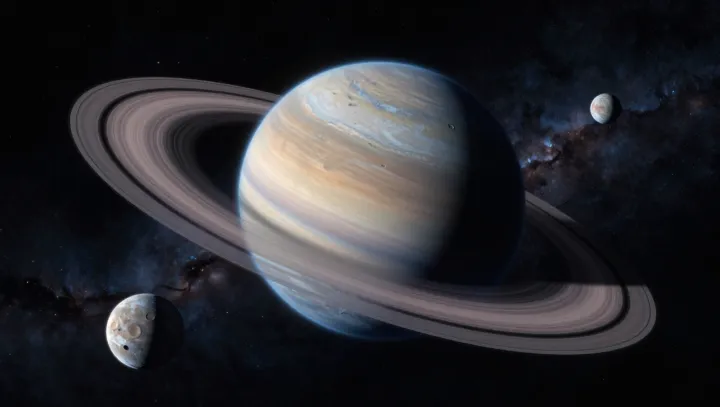
A bare ball of gas sounds unstable, yet gas giants run some of the most organized weather systems in the Solar System. On worlds like Jupiter and Saturn, jet streams and storms do not skim a thin surface layer; they extend deep into the atmosphere, where pressure and temperature climb and friction with any solid boundary is absent.
The paradox is simple: no ground, yet structured weather. The answer lies in fluid dynamics and rotation. Fast spin amplifies the Coriolis effect, slicing the atmosphere into alternating east–west bands called zonal jets. Within these bands, convection driven by internal heat flux and solar radiation feeds vortices that can merge, shear and re‑form, rather than crash into continents and die, as many storms do on Earth.
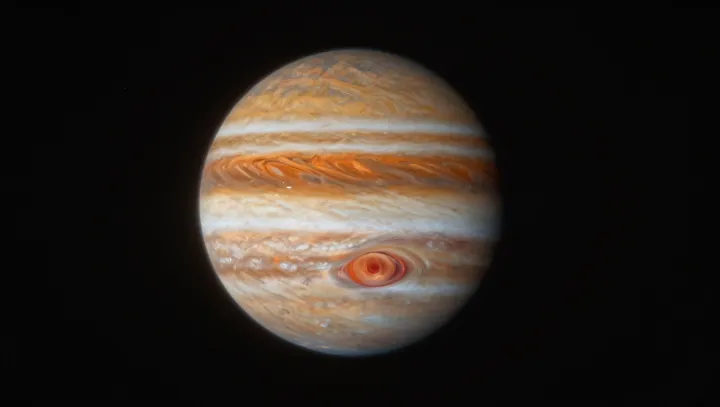
Long‑lived tempests are less fragile than they look. The Great Red Spot survives because it is an anticyclone embedded between opposing jet streams, drawing energy from surrounding shear and from vertical convection in a stratified, compressible atmosphere. Numerical models of rotating shallow‑water equations and full three‑dimensional general circulation models show that such jets and vortices can persist for spans that exceed a human life while still trading energy, changing color, shrinking and pulsing from one observing season to the next.