
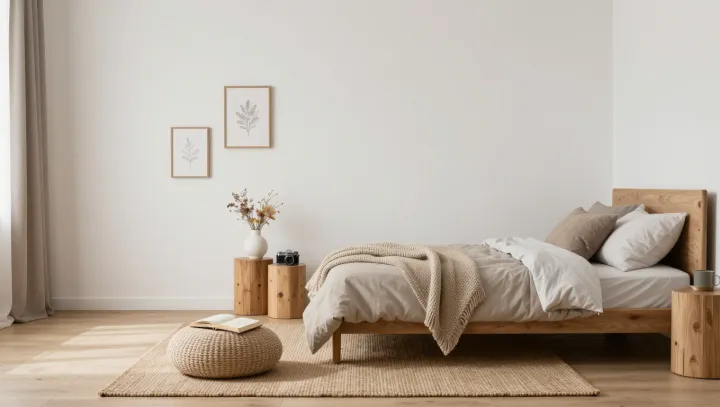
A rearranged coffee mug on a bare counter can quietly outperform a self-help book. Shift a lamp, rotate a chair, clear one shelf, and you are not decorating; you are altering neurochemistry. By tweaking what your eyes meet when you enter a room, you modulate dopaminergic signaling in circuits that evolved to scan for new resources and safe territory.
The bold claim is this: micro-changes at home can mimic the emotional lift of a brief trip away. Neuroscientists describe the brain’s “novelty bias”, where the mesolimbic dopamine system lights up in response to slight, non-threatening change. Move art to a new wall, swap the side of the bed you exit, or create a single uncluttered surface, and visual novelty reduces prediction error just enough to trigger reward without stress. Environmental enrichment studies, usually run on animals in altered cages, show measurable gains in synaptic plasticity when surroundings vary in small, safe ways.
The more radical point is that the layout of your objects is a habit machine hiding in plain sight. Place a book face-up on the coffee table and the basal ganglia now “sees” reading as the default micro-action; slide a bowl of fruit into your direct line of sight and you bias decision-making before willpower even enters the frame. This is reinforcement learning with furniture as the interface. You are not seeking beauty; you are engineering cue placement, reward expectation, and behavioral friction so that a short walk through your home feels, to your nervous system, like fresh ground.