
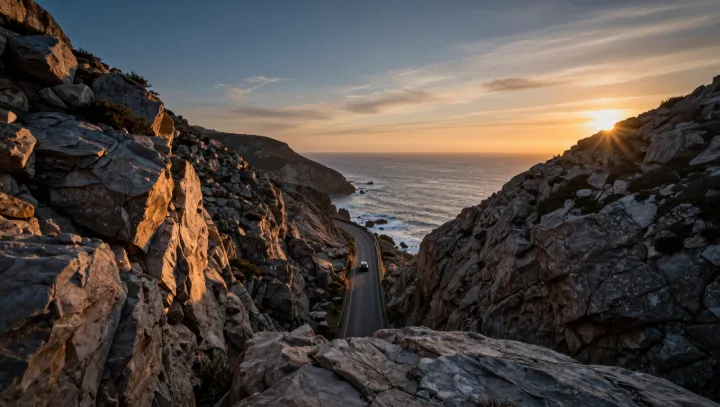
Sunset pressure is a liar. The darker it gets along a cliff edge, the more the physics of motion and the limits of human perception start to write the rules, and those rules reward the driver who bleeds speed, not the one who floors it to outrun the fading light.
Speed feels like progress. It is actually risk exposure multiplied. On a narrow shelf road, kinetic energy rises with the square of velocity, while available lateral grip and stopping distance obey friction and reaction time, not optimism. A small steering error at lower speed is a wobble. The same error at higher speed is a trajectory off the edge, because centripetal force and braking distance scale faster than your ability to correct.
The counterintuitive part is time. Slow feels wasteful. On a road with zero shoulder and blind corners, though, the binding constraint is not the clock; it is the probability of a single unrecoverable event. Risk theory treats that as a one‑strike game. Each extra mile per hour raises the odds that one rock, one oncoming truck, or one lapse in depth perception converts the drive from a schedule problem into a rescue problem.
Easing off the gas also buys cognition. Lower speed reduces cognitive load and visual processing demand, letting your vestibular system and depth cues keep up with the stream of micro‑decisions. That calmer state shrinks error rates over the entire route, which, paradoxically, makes arrival before full darkness more likely than any frantic sprint that ends in a blocked lane, a blown tire, or a guardrail that was never designed to hold a full‑speed impact.