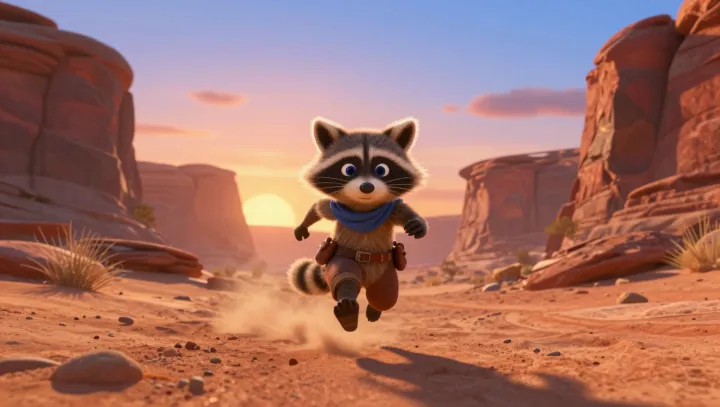
Heat, not hunger, is the real opponent on those glowing rocks at sunset. The small desert raccoon wins that fight by turning its own extremities into living radiators, a strategy that lets it sprint when a sweating human would already slow. Each stride is not only locomotion. It is a heat‑management decision written in anatomy.
Most of the work is hidden in microcirculation. Inside the paws, dense capillary beds and arterio‑venous anastomoses open wide, a textbook case of vasodilation that shunts hot blood close to the ground’s cooler boundary layer. Thin pads, scant fat, high surface‑area‑to‑volume ratio. Heat exits fast. The rocks cut and glare, yet they also serve as an enormous passive heat sink for the animal’s core temperature.
Even more underrated is the tail. Long. Lightly furred. Packed with blood vessels arranged for countercurrent heat exchange, it operates like a compact cooling fin you would see on an overclocked processor, only here the engineering name is peripheral thermoregulation. When the raccoon pauses, the tail lifts and fans. When it runs, blood volume through that appendage spikes, dumping warmth into moving air instead of wasting precious body water on sweat.
What looks like carefree dusk sprinting is strict energy accounting. By outsourcing heat loss to paws and tail, the animal preserves hydration, keeps enzymes near their thermal optimum, and stretches hunting minutes past the point where a human, soaked and overheating, would already be forced into shade.