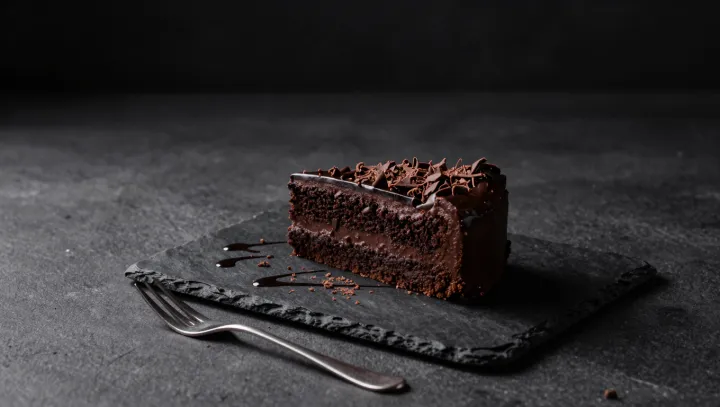
Silky ganache is not innocent; it is engineered pleasure. When a spoon cuts through that uniform, ultra-smooth mass, mechanoreceptors in the tongue and palate fire in tight patterns that somatosensory cortex reads as luxurious, while orbitofrontal cortex starts assigning value before flavor even arrives.
More sneaky still is the way fat and sugar are staged. Slow-melting cocoa butter crystals extend oral exposure, so triglyceride droplets and sucrose molecules keep bathing taste buds and trigeminal fibers, sustaining afferent input into the mesolimbic dopamine pathway. That timing matters, because ventral tegmental area neurons respond not just to intensity but to the rising curve of anticipated reward, reinforcing the behavior of taking the next bite.
The ingredients look ordinary on a label, yet their physical form turns the cake into a behavioral loop. Emulsified ganache stabilizes fat globules, giving a consistent coating that blunts sensory-specific satiety, while the ratio of sugar to cocoa solids shapes activity in nucleus accumbens and amygdala, welding emotional memory to that mouthfeel. What seems like dessert is, at circuit level, a carefully tuned stimulus stream that keeps asking your brain to say yes again.