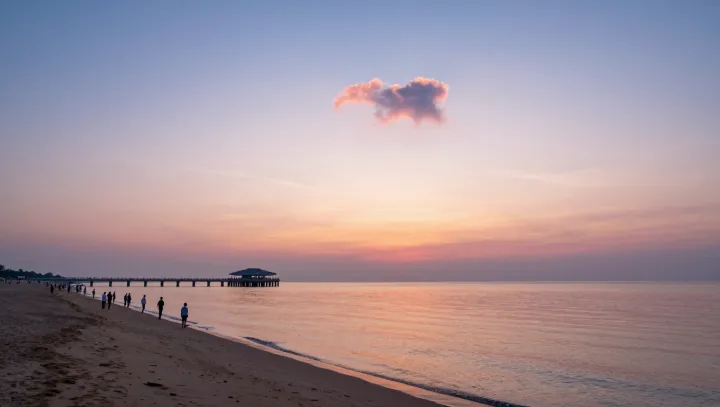
That stubborn cloud is not lazy at all. It is pinned. Above many coasts, a narrow column of rising air locks a cloud in place while the rest of the sky drifts on a broad conveyor of wind. Where land heats faster than water, a sharp pressure contrast pulls a sea breeze inland and focuses vertical motion over the shoreline.
Hidden in that rising column is a simple verdict from physics. Warm air over sand expands, lowers surface pressure, and triggers convection, while cooler marine air slides underneath like a slow wedge. At the top of this updraft, near an inversion layer where temperature briefly climbs with height, moist air cools to its dew point and condenses. A cloud forms. It keeps reforming in almost the same spot even as individual droplets are replaced and carried away by shear aloft.
The stillness is an illusion, and a revealing one. The cloud marks the intersection of sea breeze circulation, thermal updraft, and sometimes orographic lifting if a low ridge sits just inland. Together they sculpt where light scatters, where edges sharpen, where colors deepen. Every streak of orange or sudden shaft of crepuscular rays rides on these quiet pressure gradients that a single anchored cloud so cleanly betrays.