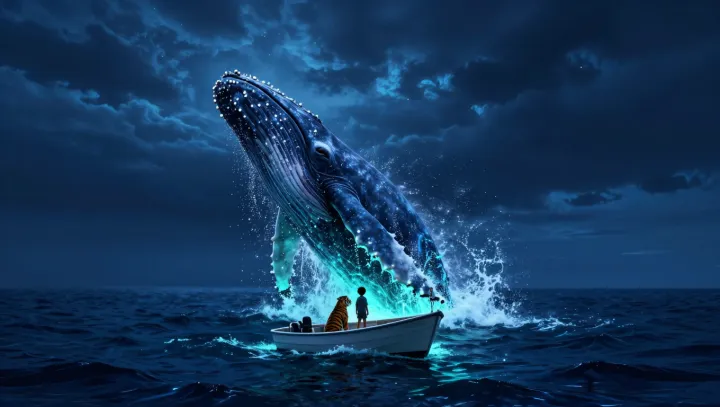
Saltwater makes the rules. A shattered hull, drifting debris, and a young man clinging to a fragment create an experiment no ethics board would approve. Out here, homeostasis is not a chapter in a textbook but the thin line between circulation and collapse, between consciousness and the slow fade of synapses.
The harsher truth is that the sea is a better physiologist than any lab. Dehydration strips plasma volume first, thickening blood, forcing the heart to work harder as vasoconstriction tries to preserve pressure. With no fresh water, the kidneys confront hypernatremia; they cannot filter salt from the ocean he floats on, so each swallowed mouthful accelerates cellular shrinkage and confusion. Hunger arrives later but bites deeper, pushing the body into glycogen depletion, then lipolysis, then the quiet cannibalism of skeletal muscle as catabolism feeds vital organs.
Yet it is isolation that cuts closest. Sensory monotony and circadian disruption twist neurotransmitter balance, turning the default mode network into a projector for hallucinations and intrusive memory. Time fractures. Identity thins. What looks like stoic endurance from afar is often a series of micro-negotiations with panic, as executive function fights the limbic system for control of one more hour, one more sunrise. In this stripped-down world, survival is not heroic narrative but a set of failing feedback loops, exposed in real time by an indifferent horizon.