
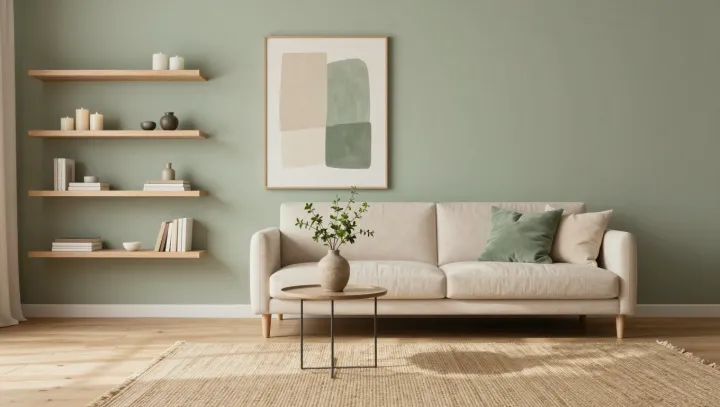
Empty floor space does more emotional work than any sofa. In environmental psychology, researchers link visual crowding to higher cortisol and increased heart rate, even when the room’s actual size does not change at all. Strip out a side table, a stack of books, two vases, and the brain suddenly processes fewer edges, colors, and object boundaries per second.
The sharper claim is this: a small living room can mimic the mental quiet of a luxury minimalist suite with subtraction, not upgrades. Attention restoration theory and studies on working memory load both show that fewer competing stimuli free up executive function, so the mind stops “scanning” and starts idling. Hotel designers exploit this with large negative space, low furniture profiles, and tight control of visual noise around sightlines and circulation paths.
The real surprise is how little editing it takes. Remove anything that breaks a clean horizontal line, keep one focal object, let walls and floor carry most of the visual field. That imbalance—more empty volume than furniture mass—acts like white space in graphic design, giving every remaining piece psychological margin. The room is not larger. Your nervous system just stops bracing for impact.