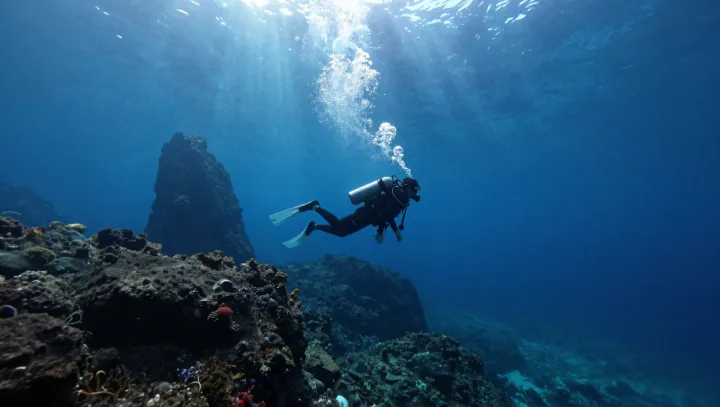
Shallow water cheats the brain far more effectively than deep water ever can. Sunlight floods the first meters, producing high luminance, sharp color contrast and long-range visibility that the visual cortex is tuned to treat as rich, important input. In that bright cone, coral heads, boulders and sand ripples throw hard-edged shadows that exaggerate depth cues and make even a modest reef look monumental.
Pricey deep expeditions, by contrast, often strand divers in what feels like a blue hallway. Light is stripped out by absorption and scattering, reducing spatial frequency detail and color saturation just as rods dominate over cones in the retina. With fewer edges and reference points, the brain’s depth perception and size constancy systems have less to work with, so an impressive wall or wreck can be processed as a flat backdrop rather than a towering structure worth emotional investment.
The real amplifier of awe, many instructors quietly argue, is structural complexity within that lit zone. Patch reefs, seagrass, ledges and rubble create high fractal complexity that repeatedly triggers the brain’s scene construction and salience networks, rewarding the diver with constant micro-discoveries. A low-budget shore entry that delivers that dense visual information every second often outperforms a deep boat drop where money buys logistics, not neurons firing.