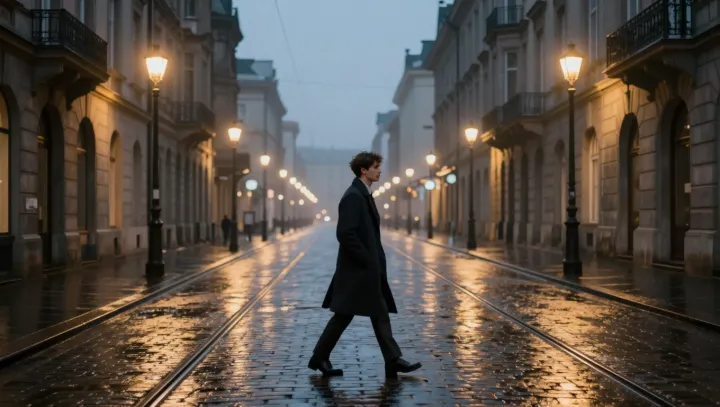
A wet city street does more styling work than any tailor. Reflected light flattens horizontal clutter, while a single dark column of fabric cuts through the glare and pulls the eye upward. On the man wearing a long coat, every droplet and puddle becomes background noise; his outline becomes the clean signal.
Authority here is a visual shortcut, not a moral quality. Vision science calls it figure–ground segregation and size constancy: the brain compresses chaos by locking onto the tallest, most continuous shape with the highest luminance contrast. A dark coat, running from shoulder to near-ankle in one uninterrupted block, creates a vertical axis that the visual cortex treats as structure. Short, bright garments fracture that axis and invite the gaze to zigzag sideways instead of climbing.
Simple shoes finish the trick by refusing to interrupt the line. No chunky soles, no color breaks, just a low-contrast extension of the coat’s downward path. In that split second of silhouette recognition, when neural circuits decide who looks like they occupy more space, the man in the long dark coat is granted extra height and borrowed authority long before he says a word.