
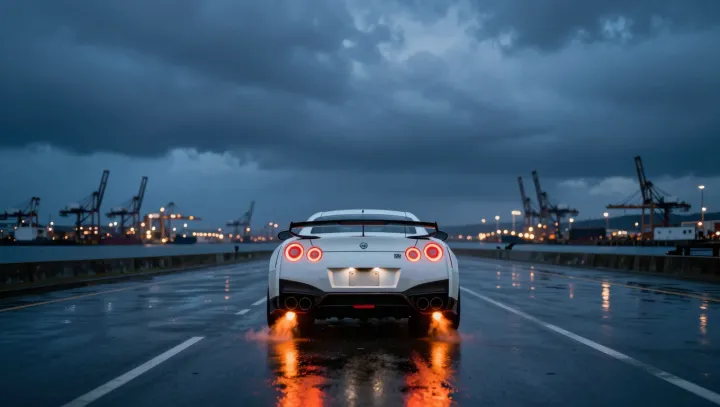
Exhaust fire is not an accident; it is a calibrated indulgence. Those bright blue and orange bursts come from afterfire, when unburned hydrocarbons ignite in the hot exhaust stream instead of inside the combustion chamber.
The odd truth is that some power is thrown away to protect other power sources. Aggressive engine control maps keep the throttle plate open and inject extra fuel during gearshifts or overrun, maintaining high exhaust gas temperature and flow. That heat keeps turbocharger turbines spinning, reducing turbo lag and preserving boost pressure between shifts, even though it wastes chemical energy that could have done work on the pistons.
A harsher claim is that the spectacle matters as much as the speed. Manufacturers and tuners use rich air-fuel ratios, delayed ignition timing, and minimal exhaust silencing to create visible flames and sharp pressure pulses that signal performance to bystanders. The engine, catalytic converter, and exhaust valves pay the price through increased thermal stress, soot, and potential component fatigue, but the car gains a theatrical identity impossible to fake with speakers or software.
The most technical defense is that some of this waste is already baked into racing-derived setups. High specific-output engines, large turbochargers, and low-restriction exhausts tend to produce excess fuel in transient conditions, and deliberate afterfire turns what would be invisible inefficiency into a controlled and branded display. Out of the tailpipe comes not just gas and flame, but a carefully crafted signal about what the machine values most.