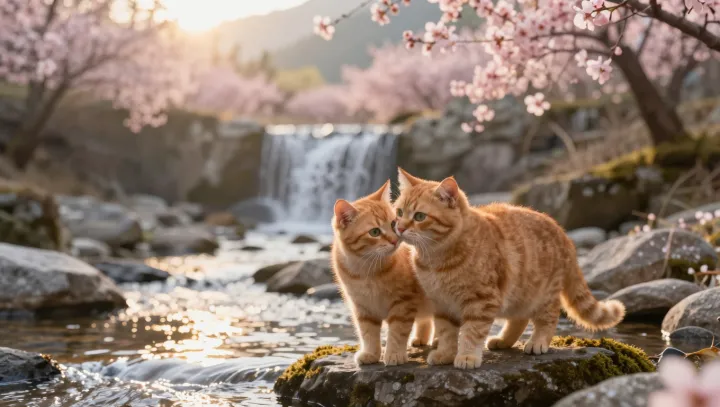
Sunlight on fur looks simple; the behavior it exposes is not. Two ginger cats pressed together in a garden are running a quiet alignment protocol, a kind of low-bandwidth negotiation that ethologists now group under social synchronization. One head tilt. One pause. One slow lean. Each tiny shift updates the shared status of the relationship.
At the core is scent, not sentiment. Facial rubbing deposits secretions from the cheek glands, loading the partner with a familiar chemical profile that the vomeronasal organ can parse like a constantly refreshed contact list. This shared odor field reduces social uncertainty and helps regulate the hypothalamic stress axis, keeping arousal low even in a contested space such as a sunny patch of soil.
Just as decisive is posture. Parallel bodies and mirrored grooming angles are a visible readout of limbic system agreement: no threat, no resource dispute. Micro-movements act as error correction. A whisker twitch, a fractional ear swivel, a brief tail flick all function as feedback signals that fine-tune proximity and pressure without resorting to meows, which are comparatively expensive and socially blunt in cat-to-cat communication.
What looks like idle affection is therefore a maintenance routine. Through allogrooming, synchronized breathing patterns, and repeated cheek passes, the pair keeps its alliance stable, updating a shared internal model of trust. In the still air of the garden, the loudest thing between them is information.