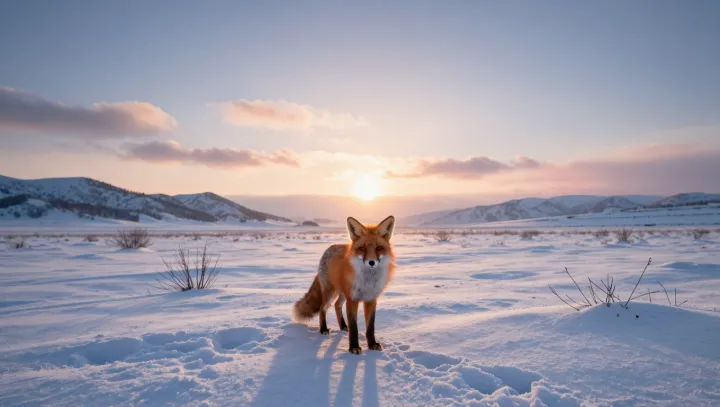
Cold barely touches a red fox stretched on open snow. Around six kilograms of bone and muscle sit wrapped in an insulation system that rivals high‑end winter gear built by engineers. Each guard hair is hollow, forming a low‑density tube that cuts heat transfer by conduction while the dense underfur traps millions of still air pockets that behave like microscopic sleeping bags.
More impressive is how the fox manages heat flow, not just heat loss. Its so‑called countercurrent heat exchange in the legs routes warm arterial blood past cooler venous blood, recovering thermal energy before it escapes to the snowpack, an elegant mirror of heat‑exchanger coils in technical outerwear boots. Short, insulated limbs and a compact torso shrink surface area relative to volume, trimming radiative and convective loss without adding mass.
The fox’s posture completes the system. Curled tightly, tail wrapped over nose, it builds a temporary microclimate where exhaled air slightly warms the fur envelope, while brown adipose tissue ramps non‑shivering thermogenesis to feed that enclosed airspace with metabolic heat, much like a battery powering an active‑insulation jacket. High‑tech fabrics chase breathability and loft; the fox simply grows, arranges and fuels them in living form.