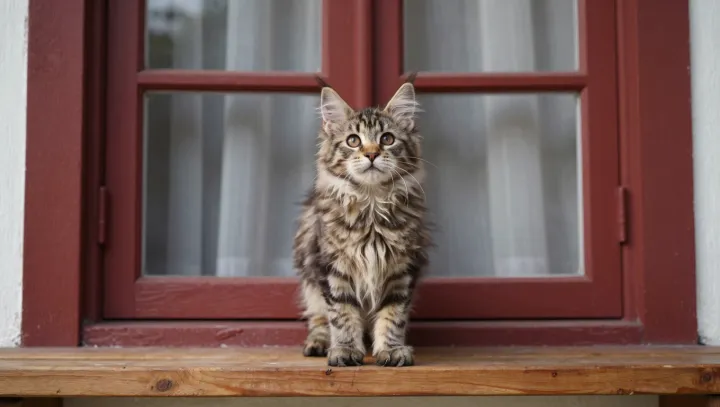
A barn cat should be aloof. The Maine Coon refused the script, evolving from frost‑proof mouser to something closer to a household Labrador in fur and whiskers. Built first for function, its heavy coat, tufted ears and wide paws were not romantic flourishes but simple survival hardware for drafty wooden barns and deep snow, where insulation, traction and water resistance decided whether a working animal stayed alive long enough to hunt.
The real plot twist sits indoors. Once these cats moved from haylofts to sofas, breeders and buyers quietly selected not only for size and coat but for operant friendliness, tolerance of handling and low aggression scores, traits measured in behavior checklists as carefully as hip structure or cardiac health. Over time, cats that followed humans from room to room, accepted repeated social contact and showed reduced neophobia were favored, turning a self‑reliant hunter into an attachment‑seeking companion that greets at the door, plays fetch and vocalizes back like a responsive dog.
Behind the myth of a gentle giant stands simple population genetics. Shift the selection pressure from rodent control and thermal regulation to social bonding and household compatibility, and allele frequencies for boldness, sociality and stress reactivity move with it, much as they did in classic domestication experiments on foxes. Out of that quiet, repetitive human choice emerged a cat that still looks built for a barn roof yet behaves like it is permanently on a family group chat.