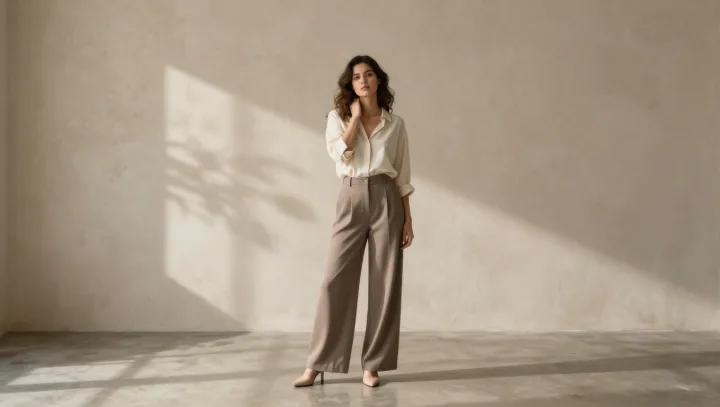
That tucked cream blouse is not polite; it is ruthless about redrawing your proportions. By disappearing into high-waisted, wide-leg trousers, the fabric sets a new border for the torso, so the eye accepts the waistband, not the navel, as the start of the body’s central block.
Here the real trick is visual hierarchy, not fabric magic. Human perception relies on reference lines and contrast: the horizontal seam of a high-rise waistband becomes the dominant cue, while the tucked blouse removes any loose, low-hanging hem that might signal a longer midsection. Because the trousers extend in one uninterrupted column from that elevated seam to the floor, the leg segment on the body’s mental “map” gets reassigned as longer. This is basic figure-ground processing in action, reinforced by the cream top receding against the usually darker, denser trouser color.
Stricter still is what the wide leg does. It turns each leg into a clean vertical block, minimizing contour cues around the hip joint that would normally reveal where the leg actually begins. Fewer visible breaks mean fewer anatomical reminders. The result is a quiet optical edit: the waist seems higher, the legs seem extended, and not a single bone has moved.