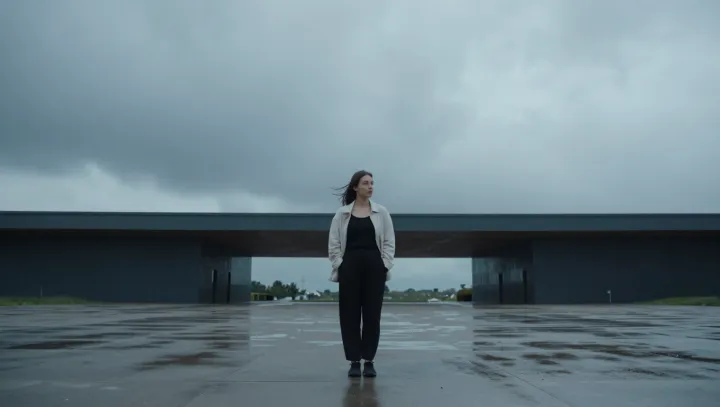
The surprise is that the best storm gear looks almost boring. No neon, no visible tech, just a quiet shell that could pass for an office blazer from a distance, yet shrugs off a sudden downpour on a crowded sidewalk.
The winning theory is simple. People only get protected by the jacket they actually put on, not the one flexing in a closet. Brands that strip designs to clean lines and neutral colors are exploiting a basic behavioral pattern: decision fatigue. A charcoal hooded coat pairs with a suit, with gym shorts, with a black hoodie. One piece, infinite combinations. That reduces what psychologists call choice overload and pushes daily wear time up, which in turn makes the membrane rating or hydrostatic head finally matter outside a spec sheet.
The flashier approach fails in plain sight. High‑contrast panels, aggressive logos, tactical pockets everywhere: these are strong for a hike, awkward on a subway platform. Once a jacket feels costume‑like, it becomes occasion‑specific, and its impressive waterproof rating or durable water repellent finish mostly protects storage boxes. Minimal city shells, by contrast, use the same performance ingredients—laminated seams, breathable micro‑porous films, articulated sleeves—but hide them. The result is a kind of stealth utility: a garment people reach for on clear days, which quietly raises the odds they are already zipped in when the sky turns without warning.
What reads as bland on a hanger becomes power on the street, where the real test is not peak performance in a storm, but how often a jacket earns its place by the door.