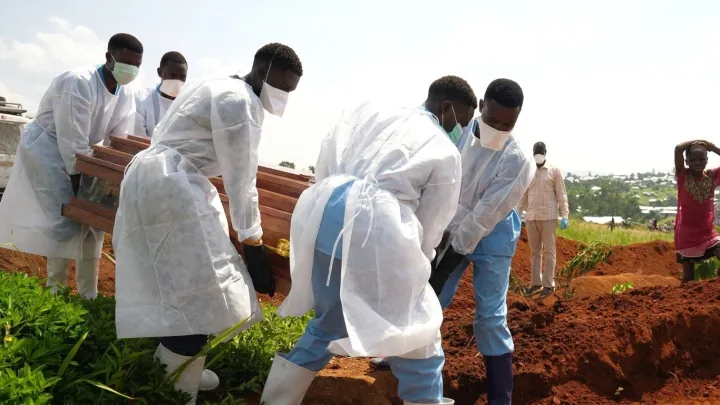
Fresh mounds argue that the epidemic is not abstract at all. A cemetery at the outbreak’s centre fills fast, its red soil turned over by teams in protective suits rather than by kin. Where once funerals stretched for hours with songs, drumming and dense crowds, now a handful of relatives stand back behind a cordon and watch.
Public health doctrine, not custom, rules this ground. To cut transmission of the virus, responders enforce strict infection prevention and control: corpses are treated as high-risk reservoirs, sealed in body bags, sprayed with chlorine, and lowered by trained staff in full personal protective equipment. Families are invited to view, not to touch. That single ban on touch challenges the core of local mourning, in which washing, anointing and dressing the dead once carried as much weight as prayer.
Yet this stripped-down ritual is still a negotiation, not a simple decree. Outbreak managers now speak of “safe and dignified burials”, a phrase that tries to balance virology with anthropology, viral load with social cohesion. Clerics are allowed to recite blessings from a distance. Relatives choose shrouds and inscriptions even as epidemiologists trace contacts around the graveyard. What looks like a quiet graveside moment is, in effect, a field laboratory in which grief, faith and biosecurity are forced to share the same narrow plot of land.