
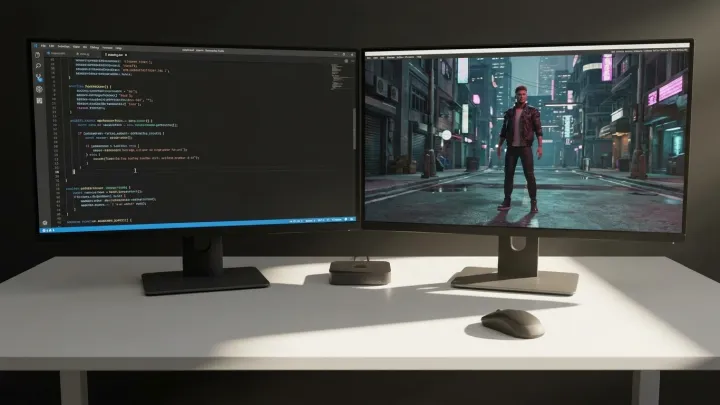
One quiet assumption dies here: Windows is no longer just a client for Linux servers, it wants to be the workstation that owns the entire development loop. From its Build stage, Microsoft outlined new Linux‑focused tools, deeper Windows Subsystem for Linux hooks and a desktop built around RTX Spark for local AI work.
This shift looks less like a side project and more like a deliberate operating system strategy, in which Windows becomes the front end while Linux, CUDA stacks and containerized toolchains sit underneath as managed machinery that developers barely touch directly. New integrations promise smoother use of package managers and SSH workflows inside WSL, while improved GPU passthrough is designed to keep PyTorch and TensorFlow training runs on Windows machines instead of pushing everything to remote clusters.
The hardware piece is bluntly commercial: an RTX Spark‑equipped desktop is meant to leverage NVIDIA acceleration as a moat against rival platforms that lack such tight OS‑to‑GPU optimization, turning the Windows PC into a compact inference and prototyping node. For software vendors, that creates a closed-loop environment where IDEs, debuggers, container runtimes and AI copilots all sit on one bill of materials, and for Microsoft it turns what used to be a commodity desktop license into a platform bet on where code, and models, actually get built.