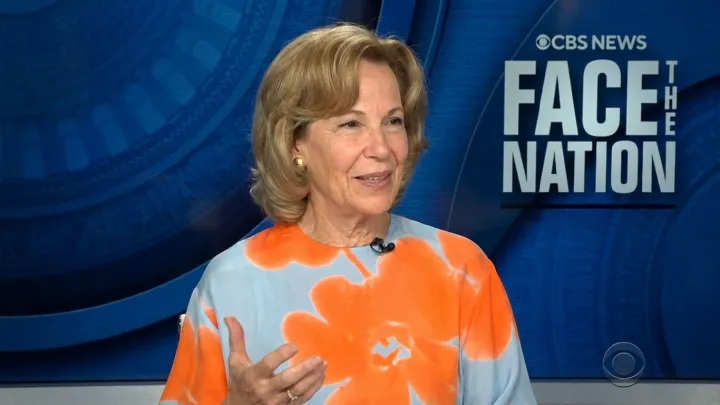
Public health fatigue, not the virus, takes center stage in this broadcast. On Face the Nation, the conversation turns from emergency drama to the slower, messier work of rebuilding trust and surveillance systems, as Dr. Deborah Birx argues that the country still treats COVID response like a campaign instead of a standing institution.
Her core claim is blunt. The United States still flies half blind. Birx tells moderator Margaret Brennan that case counts, wastewater surveillance, and genomic sequencing remain fragmented, leaving epidemiologists without consistent denominators for infection, hospitalization, and excess mortality. She presses for standardized dashboards that integrate seroprevalence data with vaccination coverage, warning that policy is still driven by headlines rather than incidence curves and hospital capacity metrics.
She also challenges political comfort. Birx criticizes stop‑start funding that surges during crisis and collapses once headlines fade, arguing that vaccine platforms, monoclonal antibody pipelines, and rapid diagnostic manufacturing require a predictable appropriations base. Short spikes in money, she says, encourage one‑off projects instead of a closed-loop system that can detect a novel variant, test countermeasures, and scale production before intensive care units fill.
Perhaps most pointed is her focus on the home. Birx repeats that community mitigation only works if families have clear risk thresholds and access to tools like high‑filtration masks, at‑home antigen tests, and antiviral prescriptions. She faults leaders for binary messaging about fear or normalcy, instead of explaining immune waning, viral evolution, and why older or immunocompromised people still need tailored protection even when national averages look calm.