
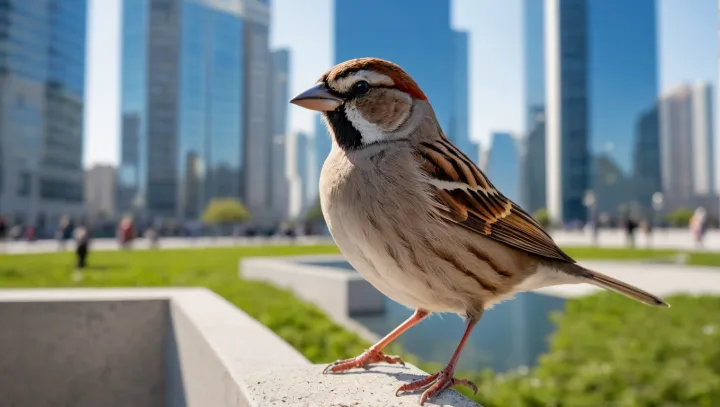
Recent observations in urban areas have once again confirmed that sparrows, those ubiquitous denizens of our cities, are significantly more active in human-populated environments. These findings were discussed in a recent publication by biologists at the Urban Wildlife Institute in Chicago, who have been monitoring sparrow behavior over the past year.
The study sheds light on the remarkable adaptability of these small birds to places heavily frequented by humans. Unlike some wildlife that shies away from human activity, sparrows appear to thrive in these dynamic settings, where food scraps and nesting materials are plentiful.
Experts suggest that the presence of sparrows can also serve as an important indicator of the ecological health of an urban area. A bustling sparrow population usually signifies a solid base of insect prey and suitable vegetation - factors that contribute to urban biodiversity.
In addition to scientific interest, the increased sparrow activity has caught the attention of local residents and birdwatchers. Social media posts about sparrows in neighborhoods have multiplied, leading to greater public engagement with urban wildlife issues.
Dr. Emily Dawson, an ornithologist working with the institute, commented, 'It's refreshing to see such positive interaction between humans and sparrows. Their adaptability to urban life can teach us a lot about coexisting with nature even as we continue to build and develop our cities.'
Moving forward, conservationists hope to use this data to advocate for urban design that supports wildlife. By planning cities with nature in mind, humans and sparrows alike can reap the benefits of shared environments. This ongoing research is a step towards harmonious living spaces for all city inhabitants, winged or otherwise.