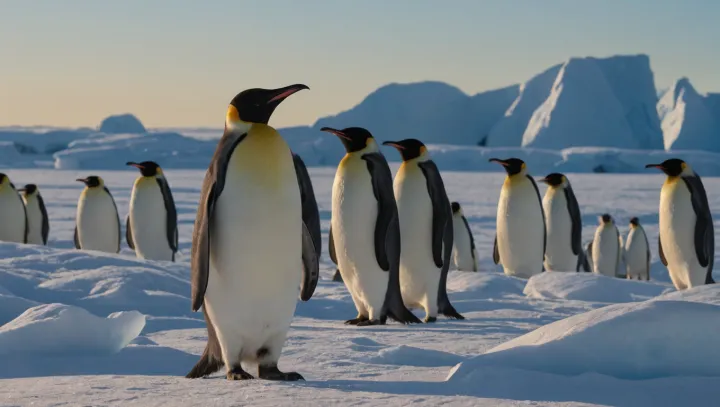
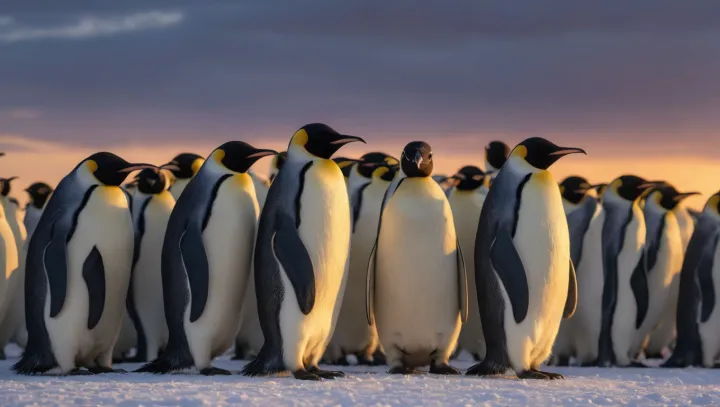
Coping with the extreme cold of Antarctic winters is no small feat, but the Emperor penguins have perfected a heartwarming strategy to endure the freezing temperatures. Researchers observing these resilient creatures have provided insight into how the communal behavior of huddling allows these birds to share warmth and increase their chances of survival during the harsh winter months.
The recent study showed that Emperor penguins form tightly packed clusters, which can include hundreds to thousands of birds, to conserve heat. In these huddles, each penguin reduces its exposed surface area and hence the loss of body heat to the cold environment. The penguins take turns being on the outside of the huddle, where they are exposed to the elements, and then move towards the warmer interior, ensuring that no single bird bears the brunt of the cold for too long.
This rotating system is a democratic process where time in the center and on the perimeter is shared equally among group members. It also exemplifies a high level of social cooperation rarely observed in the animal kingdom. Such behavior is crucial for the survival of the species, particularly when the Antarctic temperature drops to as low as minus 60 degrees Celsius.
Not only does huddling help the penguins stay warm, but it also significantly reduces energy consumption. By sharing body heat, penguins can reduce the need to burn their fat reserves, a precious resource during a time when food is scarce. This energy-saving mode allows them to survive the winter and ensures that they have enough reserves to breed and rear their young in the spring.
As climate data indicate increasingly unpredictable weather patterns and colder temperature extremes in Antarctic regions, understanding the Emperor penguin's huddling behavior has become even more critical. Conservationists are keen on monitoring their survival tactics to assess the resilience of the species against climate change.