
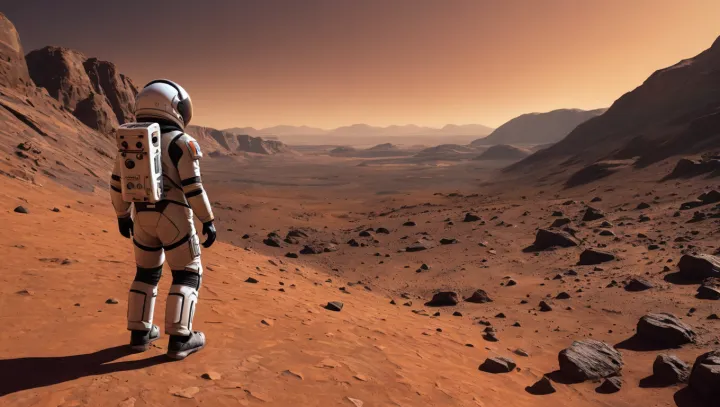
In the quest to explore and understand the mysteries of the universe, the planet Mars has remained a constant object of fascination. Named after the Roman god of war, this celestial body continues to capture the imagination of scientists and space enthusiasts alike.
Recent developments in space exploration have brought Mars back into the spotlight. This past month, NASA released breathtaking new images from their Mars rover program, revealing more of the planet's rugged terrain and opening up discussions about future manned missions.
Mars, the fourth planet from the sun, has long been the subject of study due to its potential for supporting life and its similarity in many aspects to Earth. The red planet's polar ice caps, seasons, and day length give it a familiar, albeit alien charm.
Enhancing our curiosity, private companies like SpaceX are pushing the boundaries of space travel. Elon Musk, the CEO of SpaceX, has made it clear that colonizing Mars is not just a dream, but an achievable goal within our lifetimes.
Scientists across the globe, including a prominent team from the European Space Agency based in Paris, are closely monitoring the Martian atmosphere and surface for clues that could reveal a history of water and signs of ancient life.
As humanity gazes skyward, the aspiration to set foot on Mars feels closer than ever. With each passing mission and discovery, we piece together the cosmic puzzle that is our solar system and the role Mars plays within it, expanding our knowledge and fueling our venture into the final frontier.