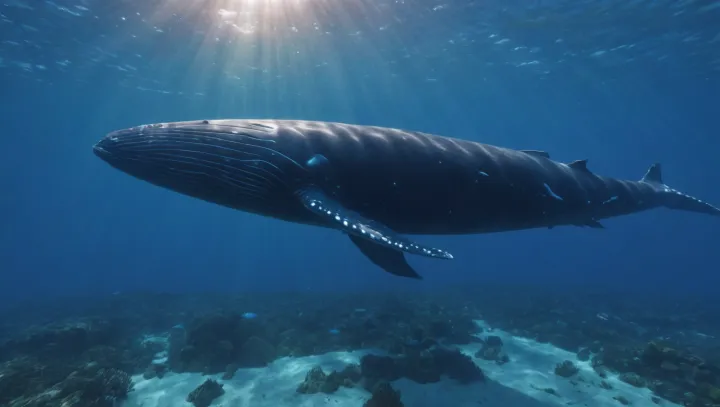
Marine biologists and ocean enthusiasts have long been fascinated by the sheer size and mass of the world's largest mammal, the blue whale. Recent studies conducted off the shores of Monterey Bay, California have brought new insights into their extraordinary dimensions, showing that they can grow up to 100 feet long and weigh as much as 200 tons.
This deep-sea leviathan's heart is the size of a small car, and it pumps an incredible 220 gallons of blood through its massive body, while its tongue alone can weigh as much as an elephant. Research indicates that, despite their size, blue whales are skilled hunters, capable of feeding on thousands of pounds of krill each day.
Appreciation for whales is growing among the public, especially as whale watching becomes a popular tourist activity along many coasts worldwide. In Monterey Bay, tour operators have reported a surge in interest with visitors eager to catch a glimpse of these gentle giants.
Yet, conservationists remind us that whales face significant risks from human activities. Noise pollution, ship strikes, and entanglement in fishing gear are primary threats to whales. Consequently, efforts to protect these majestic animals are ramping up, with marine protected areas being established and shipping routes being carefully modified to reduce the risk of collisions.
The fascination with whales also extends to the scientific community, where ongoing research helps understand their complex communication, migration patterns, and their critical role in the ocean's ecosystem. Marine biologists emphasize the importance of these creatures, not only for the health of marine life but also for the overall health of our planet.
As we continue to marvel at the grandeur of whales, their presence in our oceans serves as a reminder of the need for sustained marine conservation efforts. By protecting the whales, we ensure the preservation of the ocean's rich biodiversity for future generations.