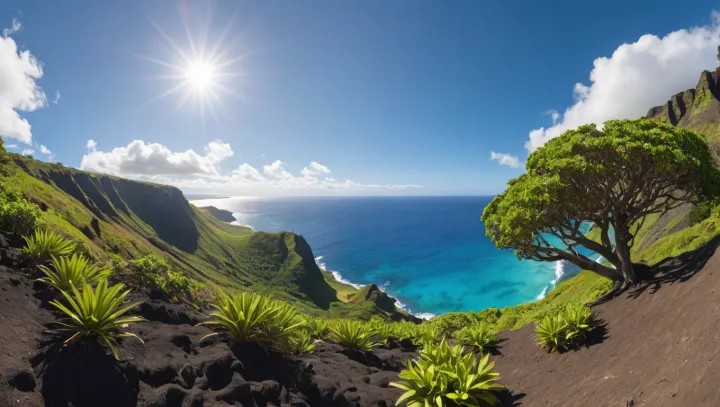
In a world often marred by environmental concerns, a new scientific study provides a glimpse of hope for one of Earth's natural paradises. The majestic Hawaiian Islands, known for their breathtaking landscapes and ecological diversity, have been confirmed to be secure from sinking into the sea for several million years to come.
This reassuring news emerges from recent geological assessments focusing on the long-term prognosis for the volcanic archipelago in the central Pacific. According to experts, despite global sea-level rise due to climate change, the underlying geological processes will ensure the stability of these islands for an extended period.
Hawaii's future has always been a subject of interest due to its location on the Pacific Plate, where volcanic activity is responsible for the formation of the islands. As the plate moves, new islands are formed while older ones erode away. However, this study emphasizes the resilience of the islands' structure and the slower rate of erosion compared to the rate of volcanic growth.
For environmentalists and tourists alike, the findings come as a relief. The islands, which are a hotspot for endemic species and a favored destination for visitors from around the globe, are assured to retain their allure without the immediate threat of submersion.
The local authorities have expressed their joy over the findings, reinforcing their commitment to preserve the natural beauty and ecological integrity of Hawaii. They emphasize that while the long-term prognosis is positive, ongoing conservation efforts remain crucial for the islands' sustainability.