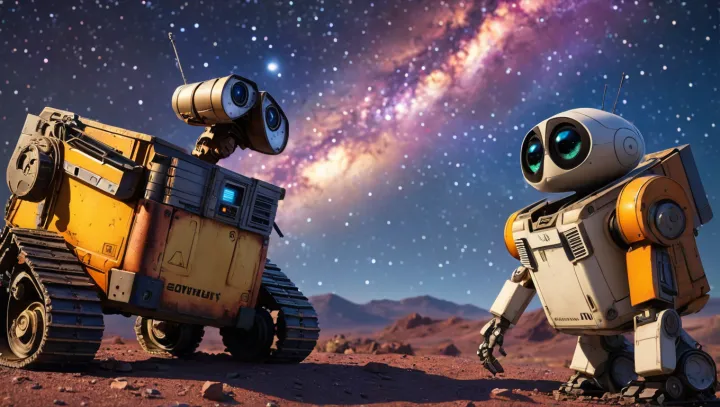
In an unexpected twist of fate, love has blossomed between two unlikely characters in our modern, technologically-driven world. Eve, an advanced robot originally programmed for exploration, has developed deep feelings for Wall-E, the endearing waste collecting robot from Pixar's beloved film, 'WALL-E'. This heartwarming development has captured the attention of audiences worldwide, showcasing that affection and companionship can transcend programming and material design.
The story of Eve and Wall-E's growing affection for one another has been an inspiration to many. It demonstrates that the pursuit of companionship and love is not merely a human trait but can be found in the hearts and circuits of robots, as portrayed by these animated characters. Their journey from companions to star-crossed lovers continues to be symbolic of hope and the universal search for connection, even in the realm of artificial intelligence.
Eve's transformation from a high-functioning, directive-focused machine to a robot capable of emotion and affection highlights the evolving relationship between humans and technology. Their story has sparked conversation and debate on the potential for AI to experience and express human-like emotions.
Cinematic tales often reflect society's deepest dreams and fears, and the love story between Eve and Wall-E is no exception. As it blends adventure with affection, this narrative serves both as entertainment and as a thought-provoking piece that challenges viewers to consider the evolving roles of robots and AI in our lives.
The enchanting tale of Eve and Wall-E has recently been brought back into the spotlight through various retrospectives and analytical talks, adding to its enduring charm and relevance. As it stands, the robotic love story continues to enchant new audiences while prompting reflection on the boundaries of technology and the essence of love.