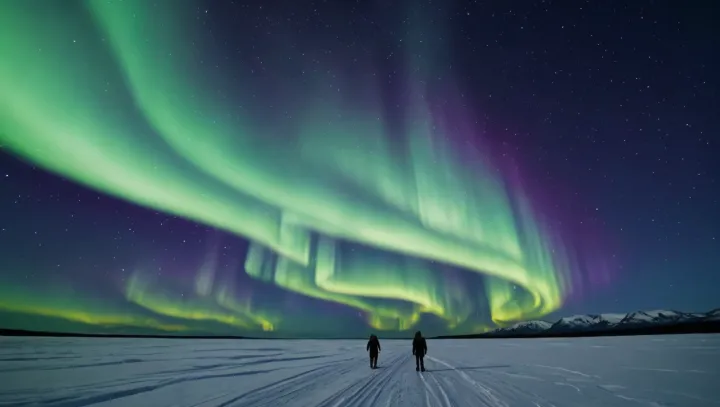
In a spectacular natural display, the skies above the North Pole have come alive with the shimmering colors of the Aurora, also known as the Northern Lights. This cosmic performance, resulting from solar particles colliding with Earth's atmosphere, has recently peaked, offering a visual feast for both locals and tourists.
The Aurora is a natural phenomenon that has long fascinated humanity with its mystical streams of green, violet, and red hues dancing across the polar sky. This unusual increase in activity has been attributed to a recent electromagnetic storm, which has intensified the naturally occurring light show.
For those eager to experience this breathtaking sight, travel to the Arctic region is currently at an all-time high. Visitors are braving the chilly temperatures and traveling great distances to witness what is often described as one of nature's most awe-inspiring spectacles.
According to experts, the best time to view the Aurora is during the winter months when the skies are darkest, and the weather conditions allow for clearer visibility. The current peak in activity means that the coming weeks are an ideal time for enthusiasts and photographers to capture the phenomena.
Travel agencies specializing in Arctic expeditions have reported an unprecedented surge in bookings, citing the Northern Lights as the main attraction. This has been a welcome boost for the tourism sector in polar regions, which offers guided tours and accommodation tailored to maximize the Aurora viewing experience.
Scientists remind viewers that while the spectacle is striking, it is a reminder of the powerful forces at play within our solar system. Education on the Aurora's scientific background has become an integral part of the tourist experience, with many leaving with not only memories but also a greater understanding of this celestial event.