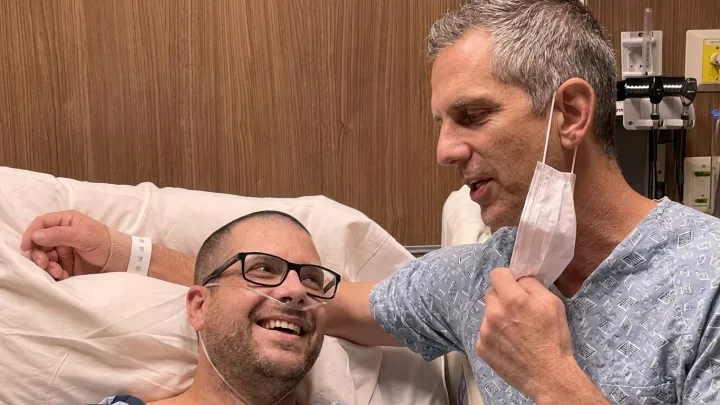
Need, not faith, usually sets the terms in organ transplant units, yet on one quiet ward a different logic worked itself out when a ministering brother offered his kidney to a man who had grown up assuming disease would always win. Monitors hummed, consent forms stacked, and a fragile idea of hope began to look almost procedural.
It is easy to romanticize survival, yet Polycystic Kidney Disease is blunt biology: cyst proliferation, nephron loss, glomerular filtration rate in steady retreat. Brad Bywater carried that prognosis from childhood, watching imaging scans turn his kidneys into crowded, aching silhouettes. Dialysis loomed as the clinical default, a maintenance script rather than a cure, with cardiovascular strain and infection risk baked into the chart. He had learned to plan around decline, not restoration.
What unsettles the usual narrative is that the donor did not emerge from immediate family pressure or a social media campaign but from a ministering relationship that had seemed more pastoral than medical. In transplant medicine, living donation is framed by histocompatibility, crossmatch results, immunosuppressant regimens calibrated to prevent acute rejection. Here, those cold terms intersected with weekly visits, shared prayers, and unhurried conversations in ordinary homes. When compatibility tests aligned, the offer of a kidney turned an abstract ministry into anatomy, binding spiritual duty to creatinine levels and post‑operative recovery charts.
The medical arc still followed standard protocol, from pre‑operative evaluation to the long tail of immunosuppressive therapy and infection surveillance, yet the emotional geometry changed; risk was no longer a solitary calculation but a shared wager on continued life. On the ward, as Bywater’s new kidney began to clear his blood, the fluorescent light picked out two hospital beds and one unsettling question: how far should care between near‑strangers be allowed to go when it starts to look indistinguishable from kinship?