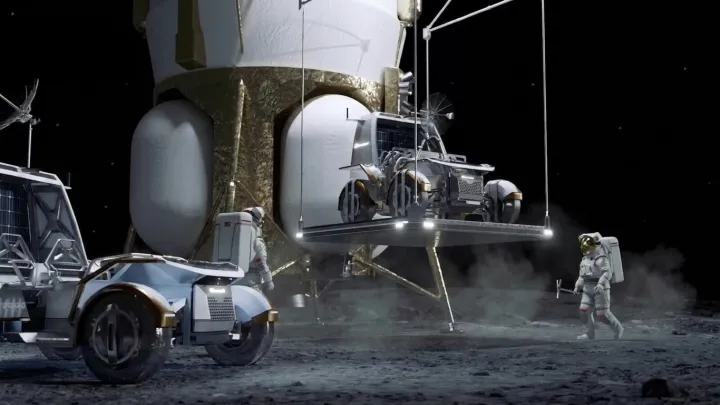
Rovers now sit at the center of NASA’s Moon base vision, not on its margins. The agency announced contracts for two astronaut-capable vehicles that will operate as shared surface infrastructure, extending what crews can reach and how long they can stay outside a habitat.
This move signals that mobility, not modules, will shape the first sustained presence on the Moon. One vehicle is planned as a pressurized rover, essentially a mobile lab that relies on environmental control and life support systems to keep two astronauts working for long traverses without donning suits. The other is an unpressurized, open rover sized for shorter excursions, but engineered with high-torque electric drives and radiation-hardened avionics so it can be teleoperated when no crew is on site.
What NASA is really buying is logistics capacity. With both rovers, astronauts can position instruments, deploy power systems, and haul regolith for in-situ resource utilization tests, including oxygen extraction from metal oxides and assessment of thermal conductivity in icy soil. Those operations turn the base from a mere outpost into an engineering experiment for Mars-class missions, where surface transport, power management, and fault-tolerant guidance software must already be proven in hostile terrain.