A palm‑sized rectangle now challenges the streaming status quo. Asus is rolling out a compact secondary touchscreen aimed squarely at Elgato’s control decks, betting that a sliver of glass beside a main monitor can still command attention and cash from creators.
This move suggests the sidekick display is no longer a niche gadget but an expected node in a creator’s setup, with Asus trying to compress Elgato’s grid of programmable keys into a smaller, denser interface that leans on capacitive touch, on‑screen widgets, and tight integration with scene‑switching software and macro layers. The question is harsh: at what point does shrinking that panel stop being ergonomic assistance and start being visual clutter, forcing streamers to squint at tiny icons while juggling live chat, bitrate overlays, and audio mixing in real time.
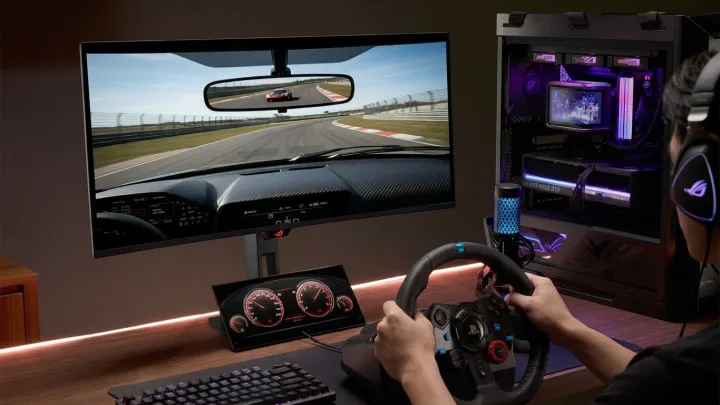
The more radical claim here is that physical footprint now matters more than tactile feedback. Asus appears willing to trade Elgato’s clicky mechanical buttons for a thinner housing that can tuck under a keyboard or dock against a monitor stand, assuming muscle memory can adapt to flat glass and haptic cues. For desk spaces already dominated by ultra‑wide displays, microphones, boom arms, and capture cards, this little screen raises a blunt design threshold: a sidekick must stay readable at a glance from arm’s length, or it risks becoming yet another glowing badge on an already crowded battlestation.