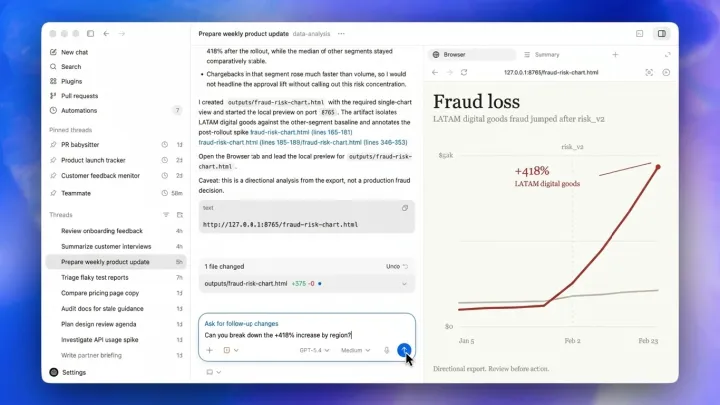

OpenAI’s revamped Codex now behaves less like a code autocomplete engine and more like an agentic operator wired into the operating system. The tool can read, write and refactor code while also manipulating files, windows and applications, turning the local machine into a programmable surface.
The upgrade targets the same developer mindshare Anthropic is courting with its own coding assistants, but OpenAI is pushing deeper into execution. Codex can chain actions, monitor process state and respond to compiler output, moving beyond static suggestions into full feedback loops built on control theory and reinforcement learning.
In practice, the system functions like a high‑level shell that rides on top of the traditional kernel and system calls, similar to how synaptic firing in a neural network coordinates many low‑level signals into a single behavior. One prompt can trigger repository analysis, dependency resolution and test runs, with the agent negotiating permissions and security policies along the way.
This shift reframes coding agents as infrastructure rather than mere productivity add‑ons, tightening the competitive field around who owns the orchestration layer between large language models and the desktop environment. If Codex can reliably manage that layer, the center of gravity in the Anthropic–OpenAI rivalry moves from chat interfaces to full system control.