
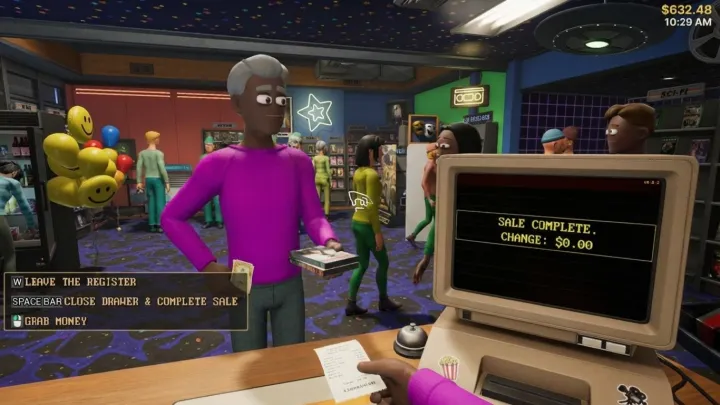
Fluorescent hum, plastic clatter and CRT glow frame Retro Rewind, a simulation that rebuilds the everyday grind of a ’90s video rental store with almost stubborn focus. Shelves wait to be restocked, late fees queue up at the counter, and a steady trickle of customers turns the work loop into the entire point of play.
Instead of branching narratives or complex progression systems, the game leans into repetition as a core mechanic. You scan tapes, file cases by genre, print membership cards and clear returns, then do it again, watching a tiny in‑game economy breathe through inventory turnover and cash drawer counts. The reward structure is modest, but the feedback loop is tight: every completed task feeds the next, like a closed circuit of dopamine and routine. For players used to high‑entropy open worlds, this narrow focus can feel almost meditative, a controlled experiment in how much engagement can be drawn from frictionless, low‑stakes labor.
Its most intricate system is memory itself. Layouts, box art and menu beeps echo a cultural era rather than simulate retail operations in granular detail, turning the store into a kind of playable archive where the real plot is the player’s own nostalgia snapping into place with each repeated shift.