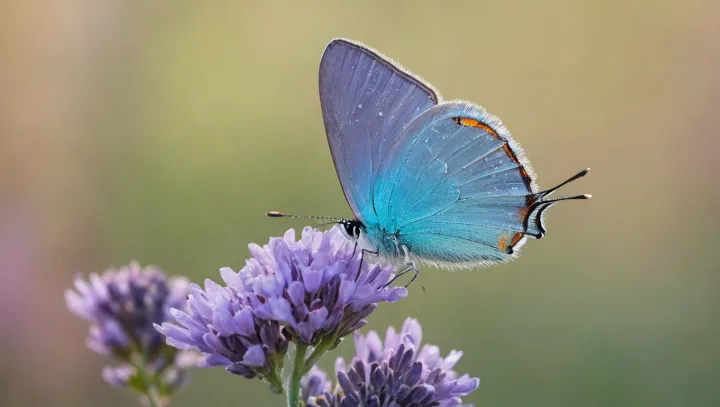
Enthusiasts from across the Eurasian continent, spanning from Europe to Asia, are abuzz with the recent sightings of the elusive Blue Hairstreak butterfly. This delicate species, scientifically known as the 'Polyommatus icarus', is known for its stunning blue wings and its rarity in certain regions.
Recently, a notable increase in butterfly sightings has been reported in various natural reserves, particularly around the Southern Ural Mountains in Russia. This has attracted attention from naturalists and photographers keen to catch a glimpse of the Blue Hairstreak's mesmerizing beauty.
The phenomenon has sparked interest from the scientific community as well. Researchers are intrigued by this sudden rise in the butterfly's presence. Dr. Elena Petrova, a lepidopterist at the Russian Academy of Sciences, suggests that climate change and conservation efforts may play a role in the species' increased visibility. 'We are observing unusual patterns in butterfly migrations and population dynamics, possibly linked to the changing environmental conditions,' states Dr. Petrova.
This species is a significant indicator of biodiversity and ecosystem health. The presence of the Blue Hairstreak can often signal an abundance of certain types of flora which they rely on for survival, including leguminous plants, their primary food source during the larval stage.
While the sightings provide hope for conservationists, they also emphasize the urgency of continued efforts in environmental protection. Habitats that support the Blue Hairstreak and other butterflies are often fragile and can be easily disrupted by human activity or environmental changes.
Butterfly watchers and nature lovers are encouraged to partake in responsible viewing practices to minimize disturbance to these insects and their habitats. Experts also urge local communities to support regional conservation measures, ensuring these winged jewels continue to thrive for generations to come.