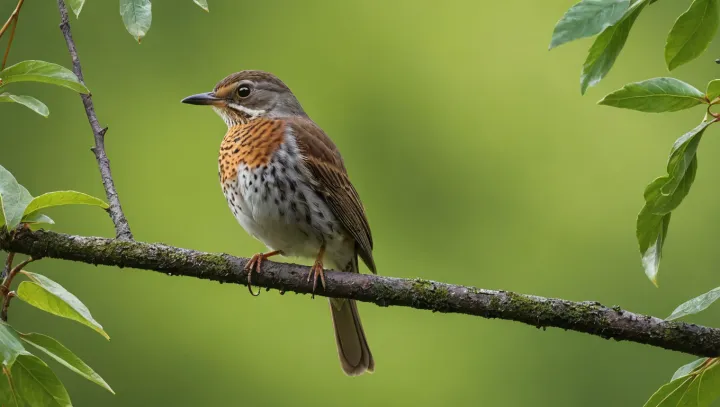
In the bustling urban park of Central London, a peculiar occurrence is captivating the attention of birdwatchers and passersby alike. Amidst the common cityscape, members of the Muscicapidae family have become an unlikely center of interest. These avian species, known for their underwhelming melodious capabilities and distinctly abrasive calls, have piqued the curiosity of nature enthusiasts across the city.
This sudden surge in popularity owes to the recent publishing of a local ornithologist's paper, highlighting the unique acoustic characteristics of the Muscicapidae. Despite their lackluster singing, these birds possess an intrinsic beauty and a remarkable capacity for adaptation, thriving in habitats ranging from deep forests to urban settings.
The Muscicapidae family, comprising of diverse species such as the European robin and the common nightingale, is a testament to nature's intricate balance. Researchers are now delving into the reasons behind their sharp calls and the ecological purpose they serve. Initial studies suggest these calls might be an evolutionary response to dense habitats, where penetrating sounds are more effective for communication.
Local birdwatching groups have organized guided tours and informational sessions in Hyde Park, offering city dwellers an intimate glimpse into the lives of these birds. The initiative aims to inspire an appreciation for urban wildlife and the delicate symphony it adds to the tapestry of city life.
Environmentalists are also using this occasion to advocate for the conservation of bird species within urban environments. They emphasize the importance of providing greener spaces and pollution control measures to ensure a safe haven for our feathered companions.
As city residents and tourists alike flock to catch a glimpse of the Muscicapidae, the message is clear: even the smallest and seemingly insignificant creatures have a role to play in the grand scheme of ecological diversity. This increased awareness has sparked conversations about biodiversity and the crucial need to protect it in a rapidly urbanizing world.