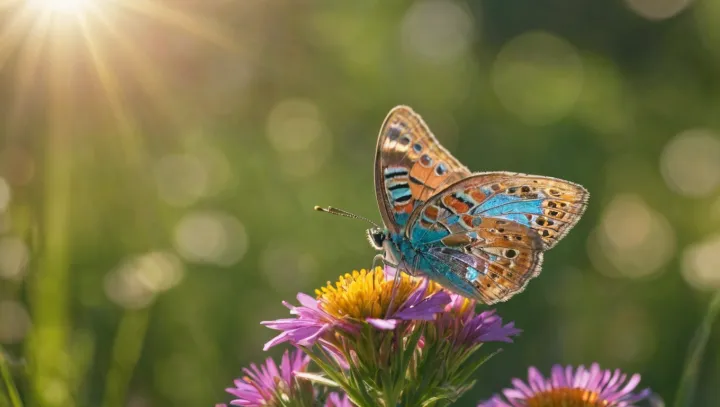
In the verdant meadows of the Cotswolds, nature's aerial artists are captivating observers with their vibrant aerial ballets. The enchanting butterfly, a beloved insect of scientists and enthusiasts alike, was recently the main attraction at the annual Butterfly Conservation Exhibition held in Oxfordshire. Attendees were treated to the mesmerizing view of butterflies flaunting their colorful wings, which, as recent studies reaffirm, serve not only as beautiful and enigmatic artwork but also as crucial tools for survival and reproduction.
This exhibition showcased how these insects use their distinctive patterns and flamboyant colors for more than what meets the eye. The captivating wing palettes of butterflies, ranging from bold iridescents to complex mosaics, serve a dual purpose. On one hand, they are a component of a natural masquerade, a disguise that can hide them from the prying eyes of predators amidst leaves and flowers. On the other, butterflies rely on these kaleidoscopic wings to allure potential mates, with recent research suggesting that color and pattern intricacy factor greatly into mate selection.
Highlighting this year's exhibit was the release of a compelling study by Dr. Amelia Thompson from the University of Oxford. Her research indicates that the intricate patterns on the wings are not just for show but crucial for mate selection processes among these insects. 'We tend to think beauty is only skin-deep,' Dr. Thompson commented at the event, 'but for butterflies, it's a matter of life and propagation. Their wings are canvases that carry complex messages.'
The research drew large interest at the exhibit, where enthusiasts and experts alike exchanged thoughts on the role human activity plays in the conservation of these delicate creatures. Many highlighted the importance of butterfly habitat preservation and raised concerns over climate change. The event ended with a 'Butterfly Walk,' where people could see an array of species in their natural habitat and even partake in tagging of butterflies to help track their migration and breeding patterns. It served as a gentle reminder of the fragile beauty and critical ecological role these insects represent.