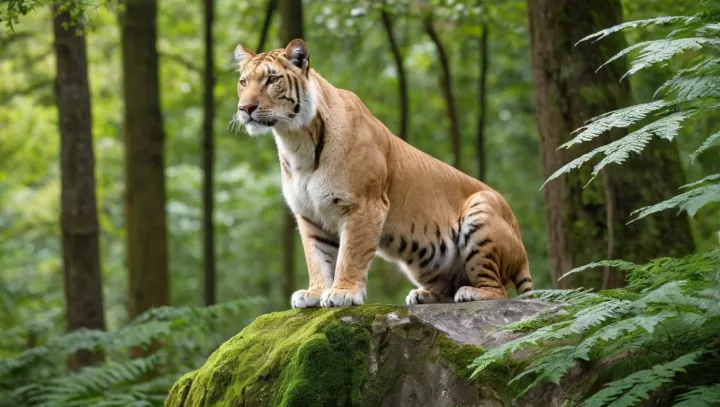
In a fascinating showcase of nature's diversity, recent observations have highlighted the striking contrast between the sizes of ligers - the hybrid offspring of lions and tigers - and the much smaller wild lynxes. This comparison brings to light the incredible range of animal sizes and adaptations within the Earth's ecosystems.
Ligers, renowned for their impressively large stature, are the world's largest big cats, often weighing over half a ton. These giants are a result of crossbreeding between a male lion and a female tiger, which does not occur naturally in the wild. Though imposing in size, ligers are not commonly found in nature and mainly appear in captivity.
On the other end of the spectrum, the elusive lynx species scours the forests of North America, Europe, and Asia. Weighing between 10 to 70 pounds, lynxes are well adapted to their habitats, being excellent climbers and possessing keen senses that aid them in hunting smaller prey - a marked difference from the diet and predatory skills of the much larger ligers.
Recent sightings at the Mountain Whisper Wildlife Sanctuary in Colorado have reignited interest in the distinct physical traits and survival strategies of these two fascinating species. Sanctuary staff have observed the resident lynxes exhibiting remarkable agility and stealth, solidifying their role as integral, though often overlooked, components of their ecosystem.
The juxtaposition of the sanctuary's smaller cats with the magnificence of ligers underscores the importance of animal conservation efforts. Experts at the sanctuary emphasize that preserving diverse species like lynxes is crucial for maintaining balance within our planet's biologically rich habitats. They argue that the attention drawn by larger, more charismatic animals should not overshadow the conservation needs of smaller, yet equally important wildlife.
Mountain Whisper continues to educate the public about these unique animals through guided tours and interactive sessions. Their conservation messages are clear: to appreciate the natural world's vast array of creatures, both great and small, and to promote efforts to protect them for future generations to witness and cherish.