
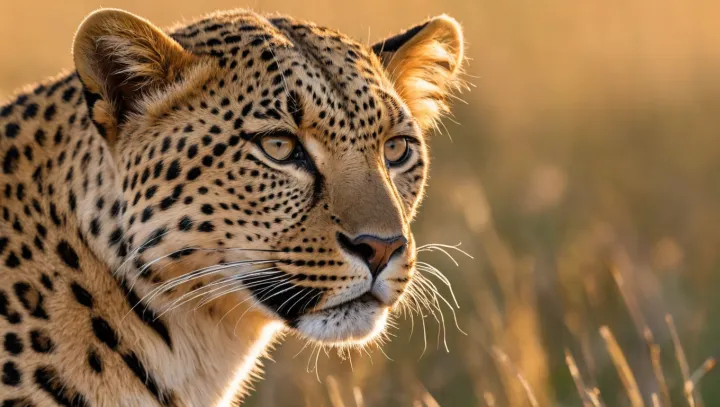
Recent observations by wildlife enthusiasts have revealed an intriguing fact about the vocalizations of leopards, a majestic mammal typically associated with roars rather than meows. Remarkably, when not asserting their dominance or signaling danger, leopards produce sounds startlingly similar to the humble meow of a kitten, striking a chord of commonality between wild beasts and domestic felines.
This surprising discovery emerged from field studies conducted in grassland habitats where leopards, regarded as fiercely territorial and solitary hunters, have been caught on camera meowing. The revelation upends the common perception of leopards as fearsome predators whose vocal range is limited to intimidating roars and snarls.
Experts suggest that the meowing by leopards could serve multiple purposes, such as communication with offspring, or even as a method of social bonding with other leopards. These findings may contribute to a deeper understanding of leopard behavior and their methods of communication. The recordings of leopard meows have generated substantial interest on social media, with users expressing both astonishment and admiration for these wild cats.
Conservationists hope this new insight into leopard communication will foster a greater appreciation for these animals and their complex social behaviors. With ongoing threats to their natural habitats, it is crucial to raise awareness about leopards and the need for their protection.
The persistence of researchers and interest from the public have spotlighted the leopard in a new light, not just as a symbol of untamed wilderness but also as a creature capable of gentler, more relatable expressions. This discovery marvels at the nuances of the animal kingdom, emphasizing the intricate balance between fierce survival instincts and softer forms of communication.