In the ongoing discussions within the ornithological community, a recurring question surfaces among enthusiasts and experts alike: why do penguins possess wings if they are unable to use them for flight? This question has not only piqued the curiosity of bird lovers but also of those interested in the evolutionary adaptations of animals.
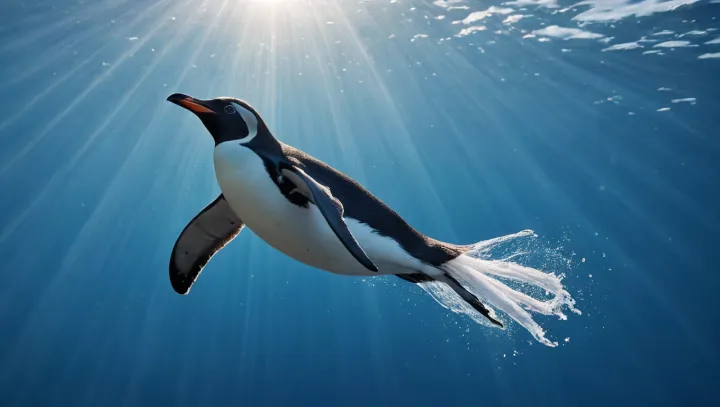
Recent studies presented at the International Bird Conference in Cape Town, South Africa, have shed light on this peculiar evolutionary development. Scientists have found that over millions of years, penguins have evolved wings that are better suited to swimming than flying. This adaptation has turned their wings into powerful flippers, allowing penguins to maneuver with incredible agility through the icy waters of Antarctica and other southern hemispheres where they inhabit.
The research clarifies that penguin wings are a classic example of evolutionary trade-offs. While these birds lost the ability to soar the skies, they gained competence in a new domain: the ocean. Their wing structure is optimized for stroking through water rather than air, providing them with the necessary speed and control to dive and catch prey efficiently.
Further reinforcing these findings, experts note that the penguin's body is streamlined for aquatic life. Their dense bones reduce buoyancy, which is advantageous for diving. Along with their wings, penguins' sturdy legs and webbed feet contribute to their prowess as swimmers, propelling them through their watery environment.
Although penguins' flightlessness once puzzled scientists, it is now understood as an extraordinary adaptation that has allowed these unique birds to thrive. By focusing on their life in the water and on land, rather than the air, penguins have become the perfect example of how species can undergo radical changes to survive and excel in their ecological niches.
As the conference concludes, the fascination with penguins and their evolutionary journey continues. Their winged yet grounded existence raises awareness about the wonders of adaptation and the complex forces of natural selection that shape the living world around us.