
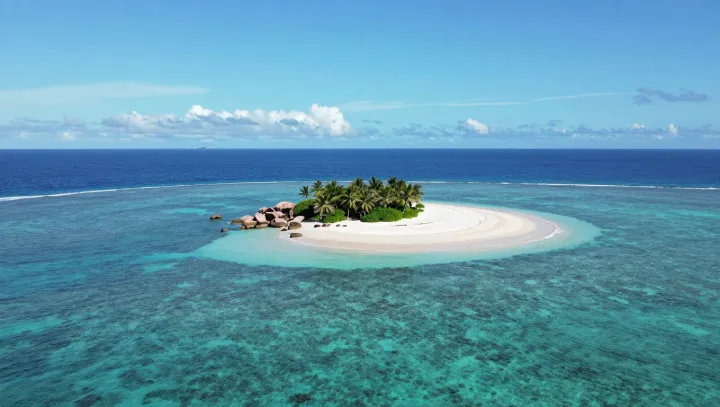
Those postcard islands are less gifts from geology than products of animal labor. At the center of that labor is one quiet trick: coral polyps outsource their architecture to chemistry, turning seawater into stone, one microscopic layer at a time.
Each polyp is tiny. Almost ignorable. Yet under its soft tissue runs a disciplined factory of biomineralization, where dissolved calcium ions and carbonate ions in seawater are marshaled into rigid calcium carbonate crystals, laid down as an exoskeleton that thickens the reef’s frame. The animal lives in a shallow cup it is constantly deepening, extending walls and partitions known as septa, and when it dies that cup does not vanish; it stays, hard and stubborn, as load-bearing infrastructure for the colony.
The real surprise is scale. Short-lived bodies, long-lived stone. Polyps bud, clone, and spread across rock like a slow-moving city, while waves grind dead skeletons into coral sand that currents stack into bars and cays. Algae such as crustose coralline algae act as natural cement, binding loose fragments, while mutualists like zooxanthellae supercharge calcification by stripping carbon dioxide from the microenvironment. Over many generations, the vertical growth of these carbonate platforms pushes them upward toward light, until their ramparts break waves, shape lagoons, and sketch those turquoise rings that satellites read as paradise.