
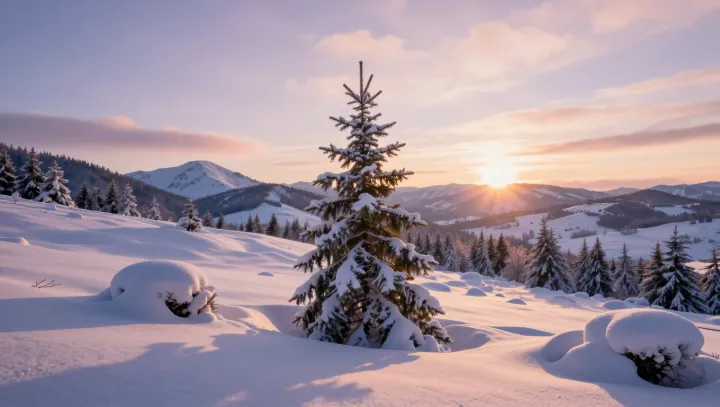
Stillness here is a lie. Along the ridge, sunlight slips a few degrees and the mountain’s albedo shifts, altering how much solar radiation the snowpack absorbs and how quickly individual ice crystals sublimate into the air.
More dynamic than a city street is this white façade, because every gust of wind drives mechanical erosion, lifting loose graupel, scouring cornices, and triggering tiny dry sluffs that redraw the slope profile by millimeters. In that same span, turbulence in the boundary layer reorganizes temperature and humidity, changing the local microclimate and the rate of metamorphism inside the snow grains hidden from view.
What looks like a fixed sculpture is really a moving interface. Minute flakes drift down and add mass; their impact compacts lower layers, alters snow density, and slightly shifts the stress field that avalanche forecasters describe with terms like shear strength and slab cohesion. Shadows advance a step, refreezing meltwater in one gully while loosening ice in another, so the mountain you think you recognize has already become a different one.