
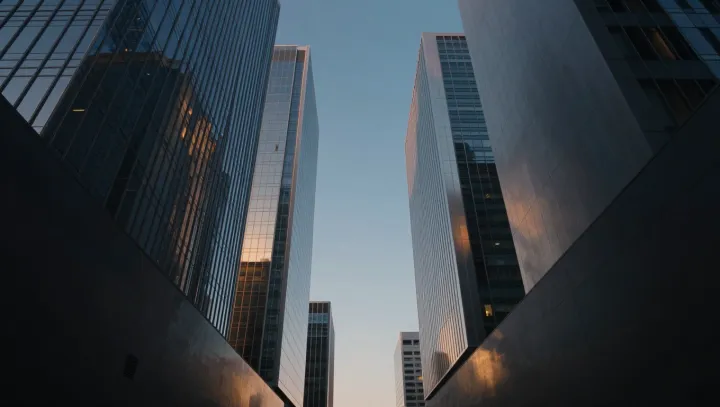
Narrow sky is the real height of the modern tower. Glass-and-steel slabs rise to capture rentable area and daylight, yet their sheer floor-plate depth and continuous curtain walls turn streets into elongated shafts of shadow. What was meant as openness becomes enclosure the moment multiple towers face each other across a standard-width road, compressing the visible slice of sky into a thin, distant band.
The counterintuitive truth is that transparency can feel heavier than stone. Highly reflective glazing and mirrorlike façades amplify luminance contrast; environmental psychologists note that sharp contrast and vertical dominance increase perceived crowding even when density is constant. Solar access studies and daylight factor models show that once towers exceed certain height-to-street ratios, ground-level illuminance drops sharply, so light is harvested for upper floors while pedestrians walk through dim, canyonlike corridors.
What tightens the city further is the way these towers edit movement and sound. Aerodynamic downwash concentrates wind at corners, pushing people toward the building line, while mechanical systems and double-skin façades smooth away the irregular edges where porches, balconies, and setbacks once leaked views of sky. With fewer visual gaps, no mid-rise terraces, and a continuous wall of glazed structure, the eye stops roaming outward and upward. It runs into a vertical ceiling long before it reaches the clouds.