
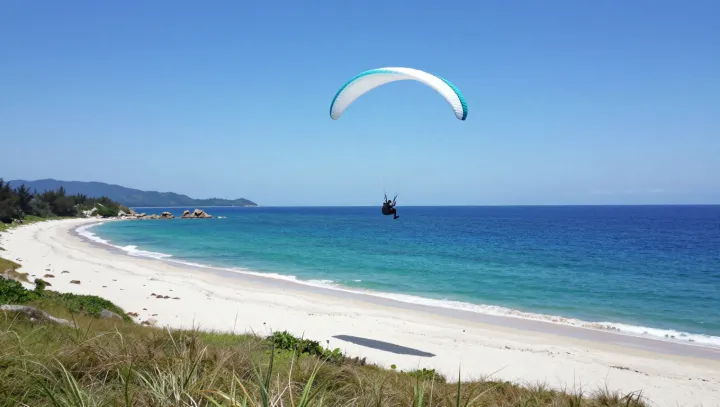
Invisible air does the real work. Along a sun-warmed ocean cliff, a sea breeze often settles into laminar flow, a smooth, layered stream sliding up the rock face while turbulence hides higher or farther out over water. That hidden structure, more than pilot bravado or bright gear, decides whether a landing feels like controlled descent or coin toss.
The smart claim is simple: a paraglider lands safely by treating that flow like code, not weather. By reading ridge lift, shear, and microgusts as inputs, the pilot builds a mental model of boundary layer behavior and orographic lift. Short brake pulses test pressure. Tiny heading changes map where the air column thickens or thins. Each response refines a provisional algorithm long before feet see sand or scrub.
The S-shaped approach is the visible output of that quiet calculation. Short. Precise. Then longer, more deliberate turns, each S carved across the wind like a for-loop stepping through altitude bands. On the upwind leg, the wing bites into the laminar core for stable lift; on the cross segment, the pilot bleeds height while tracking drift. Repeating these S figures, adjusting bank angle and groundspeed, converts a messy cliff edge into a predictable decision tree: commit, extend, or abort.
The harsh truth is that habit, not heroics, closes the loop. By flying the same S template each time, logging where sink pockets sit and where the laminar stream tilts or fractures, the paraglider builds a reusable control law in the brain. What started as chaos becomes pattern recognition. What looked like art becomes procedure, replayed until the cliff is no longer a threat, just another line in the code.