
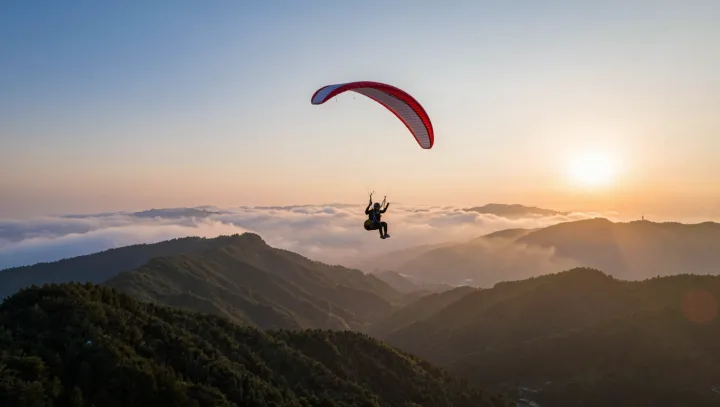
Dawn air looks hostile on paper yet it is the secret runway for elite hang glider pilots. Thin, cold and deceptively still, it strips away noise in the atmosphere so every small input from wing and body writes directly into the flight path.
The physics are blunt. Cold air at low sun angles often settles into a smoother laminar flow, with reduced mechanical turbulence and fewer sharp shear layers. Lift then comes from broad, slow‑building thermals rather than violent convective bursts. A wing working in that cleaner flow can hold a more efficient glide ratio, trading raw climb rate for stability and predictable energy retention in each banked turn.
The greater risk sits in the pilot, not the sky. Lower ambient oxygen at launch altitude slightly narrows cognitive margin, so judgment, vestibular cues and proprioception are tested while the senses report almost no speed. Airspeed indicators insist on motion, yet the quiet visual field dampens optic flow, inviting over‑control. Those who train into this mismatch between instrument data and perception gain a competitive edge: they can fly closer to stall, nearer to the wing’s best lift‑to‑drag point, for far longer.
Prestige in this niche does not come from chasing violent midday thermals. It comes from carving long, unbroken lines when the sky feels half asleep, turning marginal oxygen and unforgiving feedback into the smoothest flights of the day.