
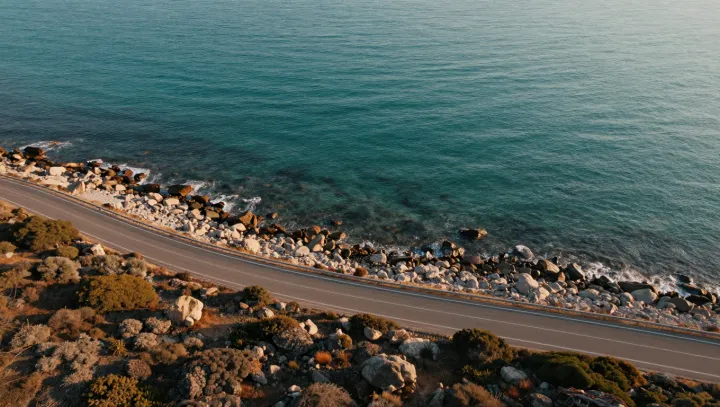
Ten minutes by open water is not a wellness fad; it is a biological reset button. Waves, rock faces and a distant horizon present what environmental psychologists call “soft fascination,” stimuli that engage vision without demanding constant top‑down control. Functional MRI studies show that in such low‑complexity scenes, the dorsal attention network can ease off, while the default mode network quietly repairs depleted cognitive resources.
Coffee, by contrast, is a brute‑force hack. Caffeine blocks adenosine receptors, boosts dopamine and norepinephrine, and spikes cortical arousal. Short term, focus sharpens; at the same time, heart rate climbs, sensory gating loosens, and already noisy offices or roads feel even louder. That second cup does not remove input; it amplifies every email ping, billboard and notification competing for working memory.
The coastline does the opposite. Few colors. Repeating patterns. Predictable motion. This stripped‑down stimulus field lowers allostatic load on the hypothalamic‑pituitary‑adrenal axis and lets prefrontal circuits reallocate metabolic resources instead of firefighting distractions. Ten quiet minutes beside water and stone are not a luxury break; they are a cleaner operating system restart than another jolt from the espresso machine.